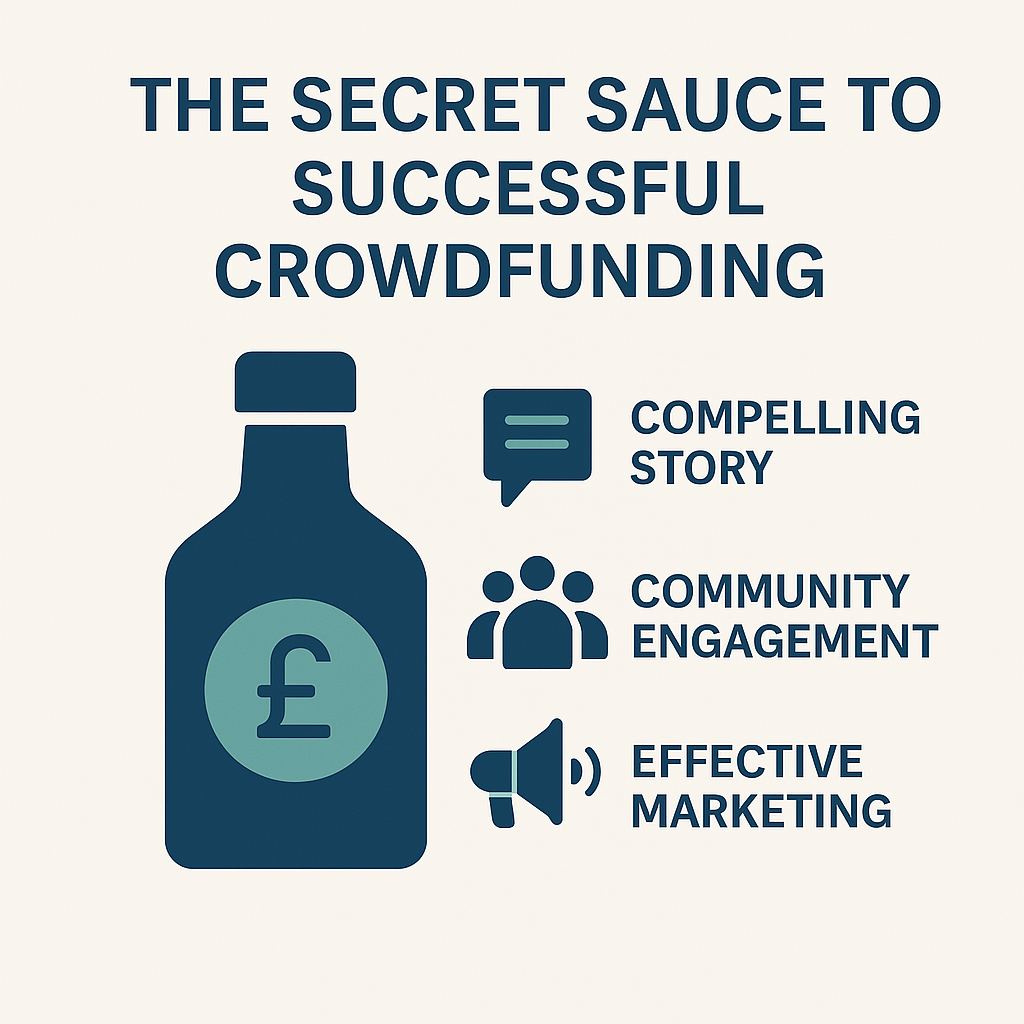
The Secret Sauce to Successful Crowdfunding

Scale & Grow Partner Mountside Ventures are Europe's leading accelerator and early-stage advisory firm, optimising all levels of the Venture value chain - from Startups to Funds & Limited Partners.
The Secret Sauce to Successful Crowdfunding
Crowdfunding has become an increasingly viable route for startups to raise capital—particularly those looking to build early community, validate their proposition, and attract non-traditional investors. But behind every successful campaign lies careful planning, a strong network, and a sharp understanding of what motivates retail backers.
This guide outlines how equity-based crowdfunding works, its benefits and challenges, and key insights for founders considering this route.
What Is Crowdfunding?
Crowdfunding allows businesses to raise capital from a large pool of individuals—each contributing a relatively small amount—typically via online platforms. There are four main types:
Equity-based: Investors receive shares in exchange for capital (e.g. Crowdcube, Seedrs).
Rewards-based: Backers receive a non-financial reward, like a product or experience (e.g. Kickstarter).
Debt-based: Businesses take on repayable loans from multiple investors (e.g. Funding Circle).
Donation-based: Individuals donate money to support a cause or idea with no expectation of return (e.g. GoFundMe).
This article focuses on equity crowdfunding, which allows companies to raise investment while retaining operational control and often strengthening brand loyalty in the process.
Who Can Crowdfund?
While technically open to any registered business, most successful campaigns meet these conditions:
Strong narrative and branding
A minimum raise of ~£100k (typical range: £100k–£1m)
Pre-existing engaged community
Clear use-of-funds strategy
Willingness to invest in campaign preparation and promotion
Note: Platforms carry out their own vetting and will only host campaigns they believe are likely to succeed.
Benefits of Crowdfunding
Access to capital: Provides a funding alternative for startups not suited to VC or angel investment.
Community ownership: Supporters become investors—leading to higher brand loyalty and organic advocacy.
Market validation: A successful raise demonstrates external belief in your product or vision.
Brand awareness: Campaigns often bring significant exposure and press opportunities.
Challenges and Trade-Offs
Time and resources: Campaigns are marketing-heavy and often founder-led. Success requires planning, content creation, and ongoing engagement.
Upfront commitment: Most platforms require that 75–80% of the round is secured in advance, often from cornerstone investors or the founder’s network.
Platform fees: Expect to pay 7–9% in platform and transaction fees.
Community reliance: The platform won’t deliver a crowd—you’ll need to bring one.
Preparing for a Campaign
To improve your odds of success:
Secure anchor investors first
Most campaigns need a lead investor committed before launch. This de-risks the raise for others and creates momentum.Invest in video and narrative
Campaigns with professional storytelling assets (especially video) perform significantly better.Build a pre-launch list
Start warming up interest 4–6 weeks in advance through social media, newsletters, and personal outreach.Negotiate the platform package
Platforms offer different levels of marketing and PR support—ask for homepage features, newsletters, or funder introductions to be included in your package.Use urgency wisely
Crowdfunding is psychological. Consider lower initial targets that you can exceed early, and use FOMO (Fear of Missing Out) to drive traffic in the final days.
Insights from a Live Campaign
In an interview, a founder who raised £575k across two campaigns offered the following:
“The money was secondary. The real value was turning our community into advocates. Crowdfunding helped us engage our network and build loyalty.”
“The platform gave us the tech and compliance framework—but it was our community that drove most of the raise. You can’t rely on the platform alone.”
“A professional video made all the difference. It brought our mission to life.”
Summary: Is Crowdfunding Right for You?
Crowdfunding works best when:
You have an existing audience or community to tap into
Your business model is easy to explain and emotionally engaging
You have the time and resources to run a marketing-led campaign
You’re looking to build a brand-led business with wide stakeholder buy-in