Understanding Venture Capital Fund-of-Funds: What They Are and How They Invest

Scale & Grow Partner Mountside Ventures are Europe's leading accelerator and early-stage advisory firm, optimising all levels of the Venture value chain - from Startups to Funds & Limited Partners.
Understanding Venture Capital Fund-of-Funds: What They Are and How They Invest
Fund-of-Funds (FoFs) play a pivotal but often under-the-radar role in the venture capital ecosystem. As the largest group of Limited Partners (LPs) investing into VC funds across Europe, FoFs quietly shape which funds get backed—and when.
This guide explores what Fund-of-Funds are, how they operate, and what emerging fund managers need to know in order to engage them successfully.
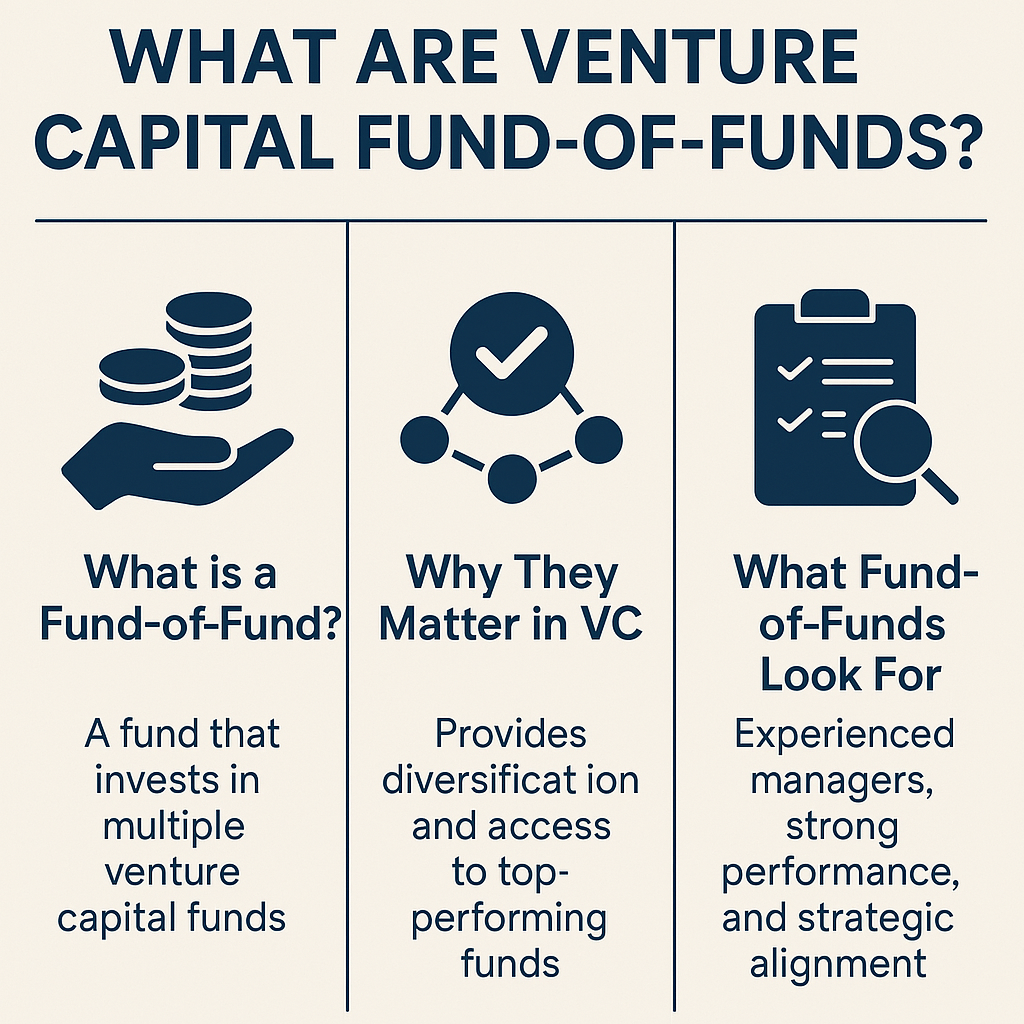
What Is a Fund-of-Funds?
A Fund-of-Funds is an investment vehicle that deploys capital not directly into startups, but into a portfolio of venture capital (VC) funds. The goal is to create diversification, access emerging talent, and generate strong returns by backing a mix of managers.
FoFs can be segmented into five types:
Generalist investors
VC-specialist FoFs
Public or government-backed
Retail investment vehicles
VCs with their own LP programmes
These multi-manager structures are some of the most important institutional backers of VC funds, particularly for first-time and emerging managers.
Why Fund-of-Funds Matter in Venture
Largest LP category in Europe
Deploying over £35 billion in assets
Support more than 700 VC funds per year
Evaluate over 14,000 VC decks annually, making around 740 investments
Because they typically invest in multiple funds per year and build relationships 12–24 months in advance, they play a key role in shaping the VC fundraising landscape.
What Do FoFs Look For?
The decision to invest is driven by a combination of:
Financial return potential
Diversification across sectors or geographies
Deal flow access and market insight
Ecosystem contribution
The most important factor? Track record—both of the fund itself and the individuals behind it.
FoFs want to build long-term relationships with managers and are particularly attentive to:
Regular reporting and LP updates
Co-investment opportunities
Participation in LP Advisory Committees
Clear and differentiated investment theses
Emerging Managers: A Key Focus Area
FoFs are increasingly backing first-, second-, and third-time funds—defined broadly as “emerging managers.”
85% of FoFs surveyed had invested in emerging managers in the past 3 years
44% acted as cornerstone LPs
Top reasons include sector expertise, prior operator or investor experience, and differentiated strategies
However, they also cite frustrations with managers who:
Lack differentiation
Struggle with relationship building
Aren’t fully transparent during fundraising
Diversity and Inclusion
Around 25% of Fund-of-Funds have mandates to invest in underrepresented managers—including women and ethnically diverse GPs. These LPs cite ecosystem improvement, better governance, and stronger returns as key motivations.
Other Key Insights
Luxembourg is the most common legal jurisdiction
Geographic and sector restrictions apply to about half of all FoFs
40% of FoFs have allocation caps per fund
Performance data shows consistent top-quartile returns, particularly for earlier vintages
Summary: Should You Engage a Fund-of-Funds?
For new or scaling VC managers, Fund-of-Funds offer capital, credibility, and connection to a broader LP community. But they expect professionalism, rigour, and a long-term mindset.
Emerging managers should engage early, understand each FoF’s focus, and be transparent about performance, structure, and strategy. In return, they may gain not only a backer—but a long-term partner.