Navigating Corporate Venture Capital in 2024

Scale & Grow Partner Mountside Ventures are Europe's leading accelerator and early-stage advisory firm, optimising all levels of the Venture value chain - from Startups to Funds & Limited Partners.
Navigating Corporate Venture Capital in 2024
Corporate Venture Capital (CVC) has become a significant force in startup funding, now participating in around 1 in 4 deals globally. Yet for many founders, CVC remains a misunderstood part of the investor landscape.
This guide unpacks how CVCs operate, what founders should consider when raising from corporate investors, and what makes these relationships work best in 2024.
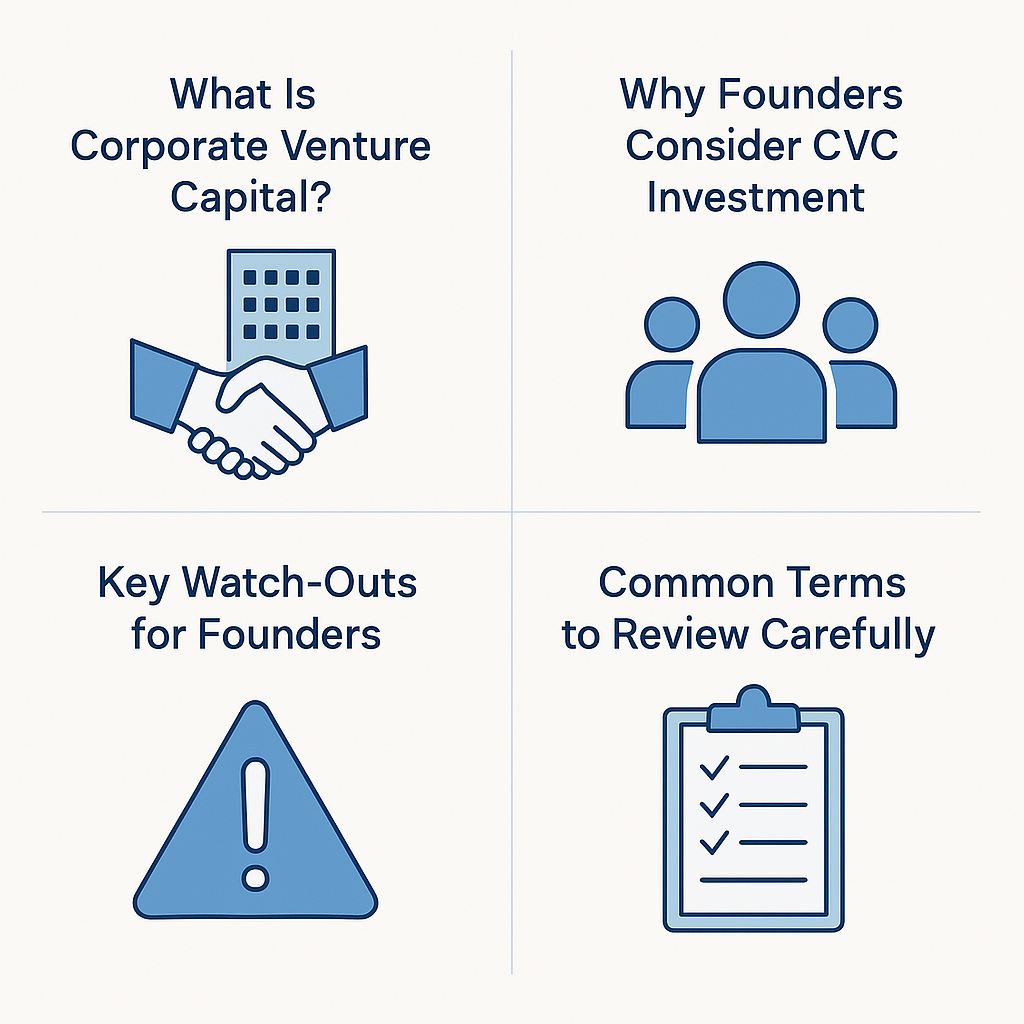
What Is Corporate Venture Capital?
CVC refers to venture investments made directly by large corporations—either from their balance sheet, through dedicated investment arms, or as Limited Partners in VC funds. While some operate like traditional VCs, others are more strategically motivated, investing in businesses aligned with their core operations or future ambitions.
CVCs come in different structures:
Strategic: Aligned tightly with the parent company’s market goals
Financial: Operate with VC-style returns in mind
Hybrid: Balancing commercial returns and strategic fit
Autonomous: Run independently from the parent, often with external LP capital
Why Founders Consider CVC Investment
Strategic validation: A corporate investor can bring industry credibility and signal confidence to the wider market.
Access to enterprise resources: From distribution channels and R&D labs to talent and IP.
Partnership opportunities: Potential customers, suppliers, or even future acquirers.
Longer time horizons: Some CVCs are more patient than traditional VCs.
Key Watch-Outs for Founders
Not all CVCs operate alike, and the additional upside often comes with complexity. Founders should be cautious of:
Misaligned incentives: Strategic interests may override financial ones—especially in M&A scenarios.
Slower deal processes: Corporate approvals can add friction and delay.
Control provisions: CVCs may seek additional rights, including consent over exits, call or put options, and competitor restrictions.
Cultural mismatch: Startups and corporates often operate at different speeds with different expectations.
Common Terms to Review Carefully
Board or observer rights: Many CVCs request a seat or observation role.
Exclusivity or ROFR/ROFO clauses: These may limit your future exit options.
Put/call options: Corporate investors may want a path to increase (or exit) their stake based on specific triggers.
Compliance clauses: Expect provisions around anti-bribery, CSR, and data use aligned with the corporate’s internal policies.
These terms are not inherently negative—but they require close scrutiny and legal review to ensure long-term flexibility.
When CVC Makes Strategic Sense
CVC funding is particularly suited to:
Deep tech, regulated markets, or complex value chains
Startups that directly complement a corporate’s ecosystem
Founders seeking more than just capital—access, expertise, or customers
Founders should look for CVCs that:
Have clear investment theses
Are transparent about decision-making
Offer consistent support, regardless of corporate cycles
Summary: Partnering with Purpose
CVCs can offer more than money—but the trade-offs are real. The best outcomes occur when both sides share strategic alignment, mutual respect, and long-term vision. Founders should approach CVCs like any other major partnership: with research, clarity, and due diligence.