The Great Debate: Serious Fintech, Zero Boredom
Why Fintech Needs Better Arguments (Not Better Panels)
I’ve always wanted Fintech Fringe to be the place where passionate, provocative discussion actually happens. Not polite panels. Not surface-level agreement. Not rooms full of smart people nodding along to the safest possible version of the future.
As an industry, fintech has become very good at consensus. But consensus doesn’t move us forward. Real progress - in fintech and in life - comes from friction. From being challenged. From hearing a smart, well-informed person explain exactly why your favourite idea might be wrong.
We don’t grow by surrounding ourselves with people who agree with us. We grow when diverse voices collide, when diametrically opposed views share the same stage, and when ideas are forced to stand up to scrutiny. That’s how blind spots are exposed. That’s how better decisions are made.
That instinct is what led to The Great Debate.
The Great Debate: Serious Fintech, Zero Boredom
The Great Debate was designed as the anti-panel.
No slides. No hedging. No “it depends”.
Instead: bold motions, opposing teams, live audience voting, heckling actively encouraged - and just enough Negronis to make people honest.
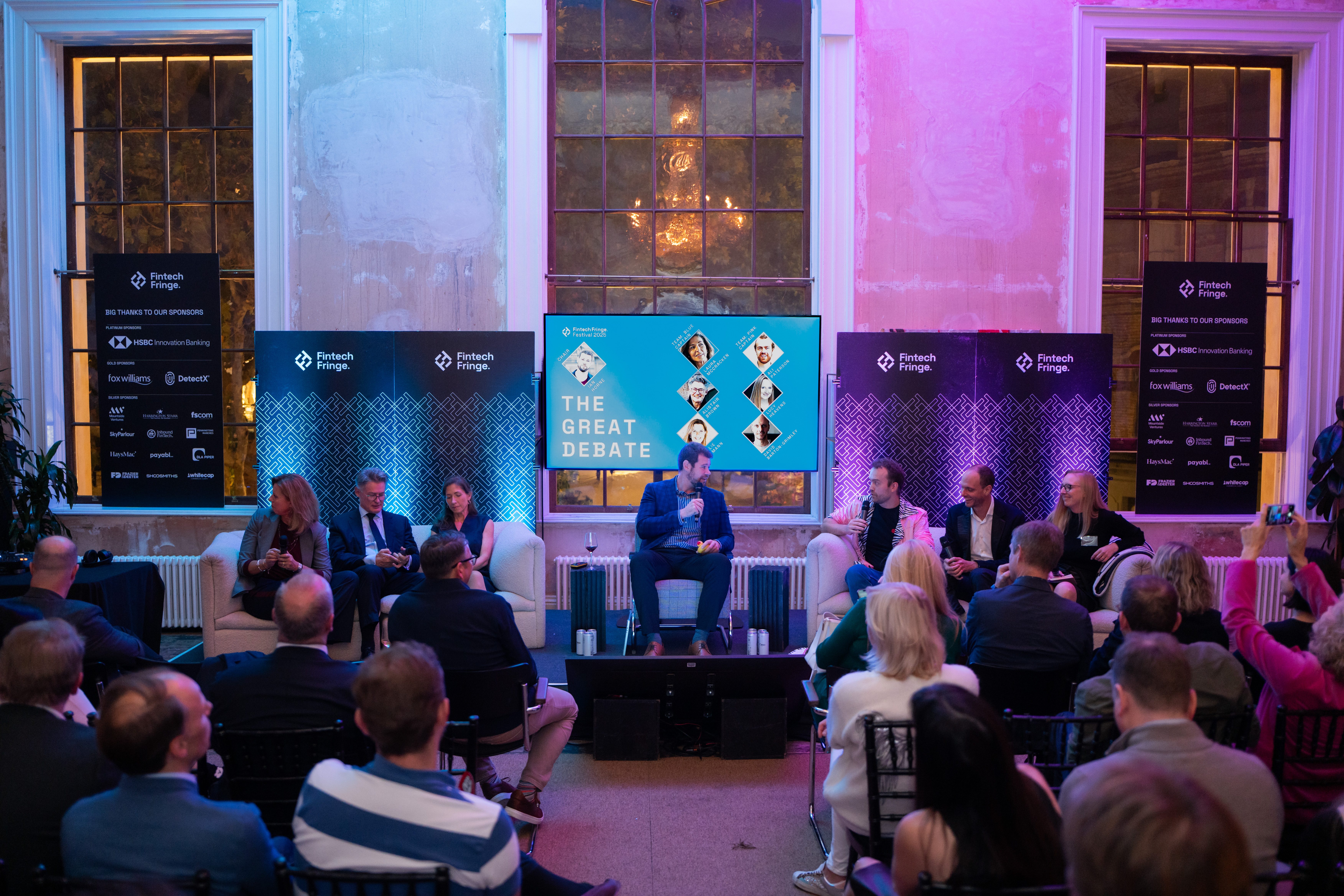
We tested the format for the first time at this year’s Fintech Fringe Festival, held at Old Sessions House in Clerkenwell. It quickly became one of the most talked-about moments of the festival.
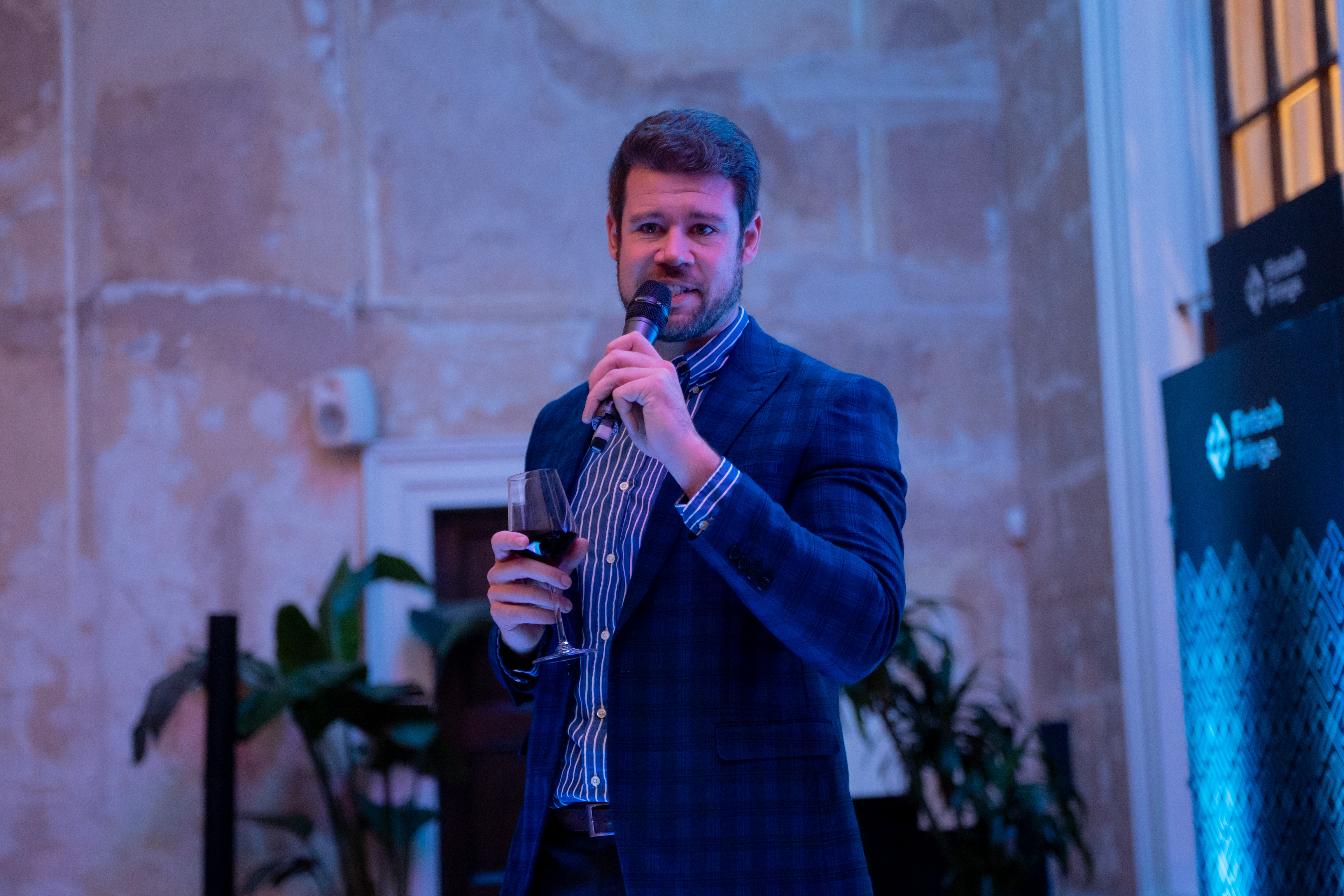
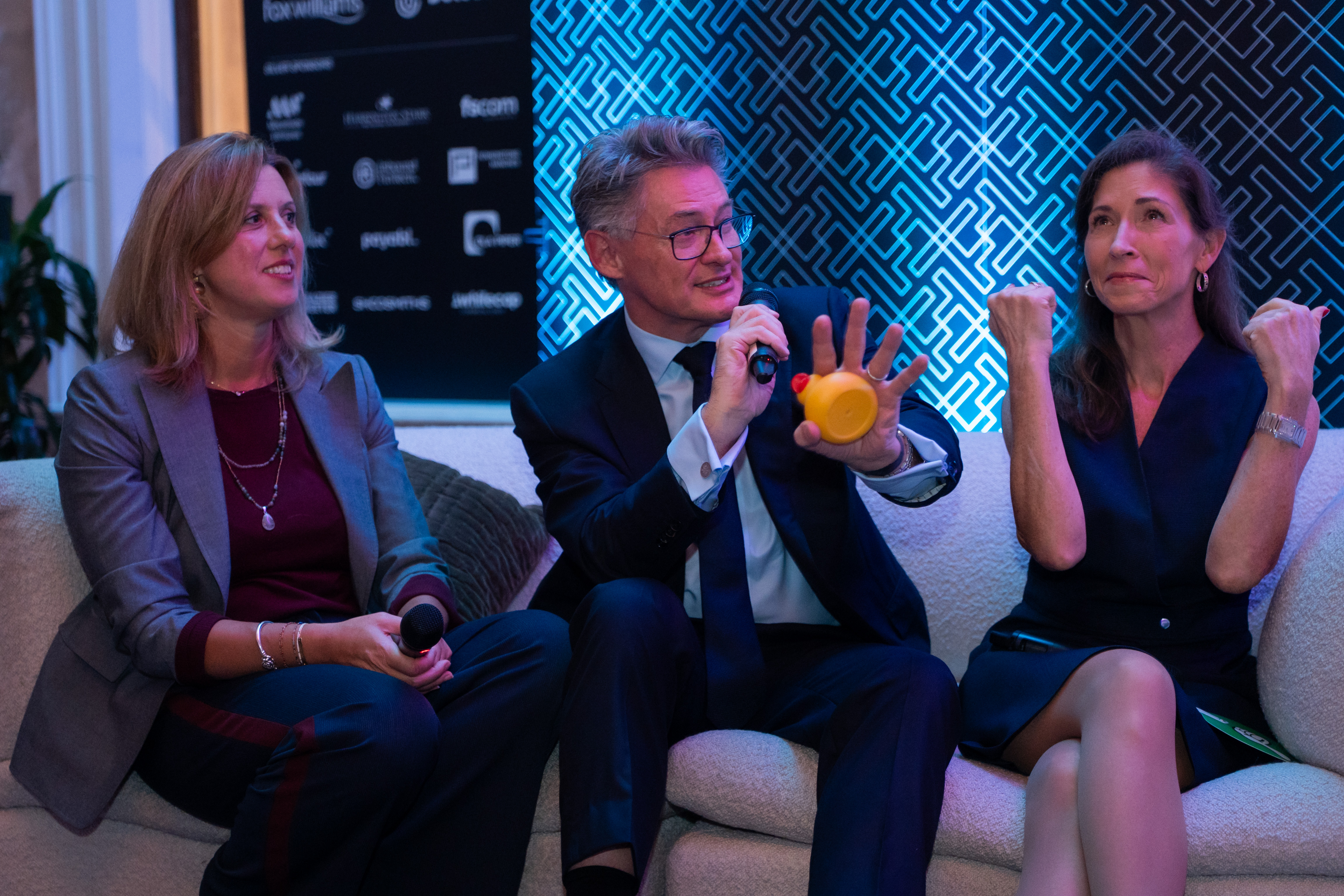
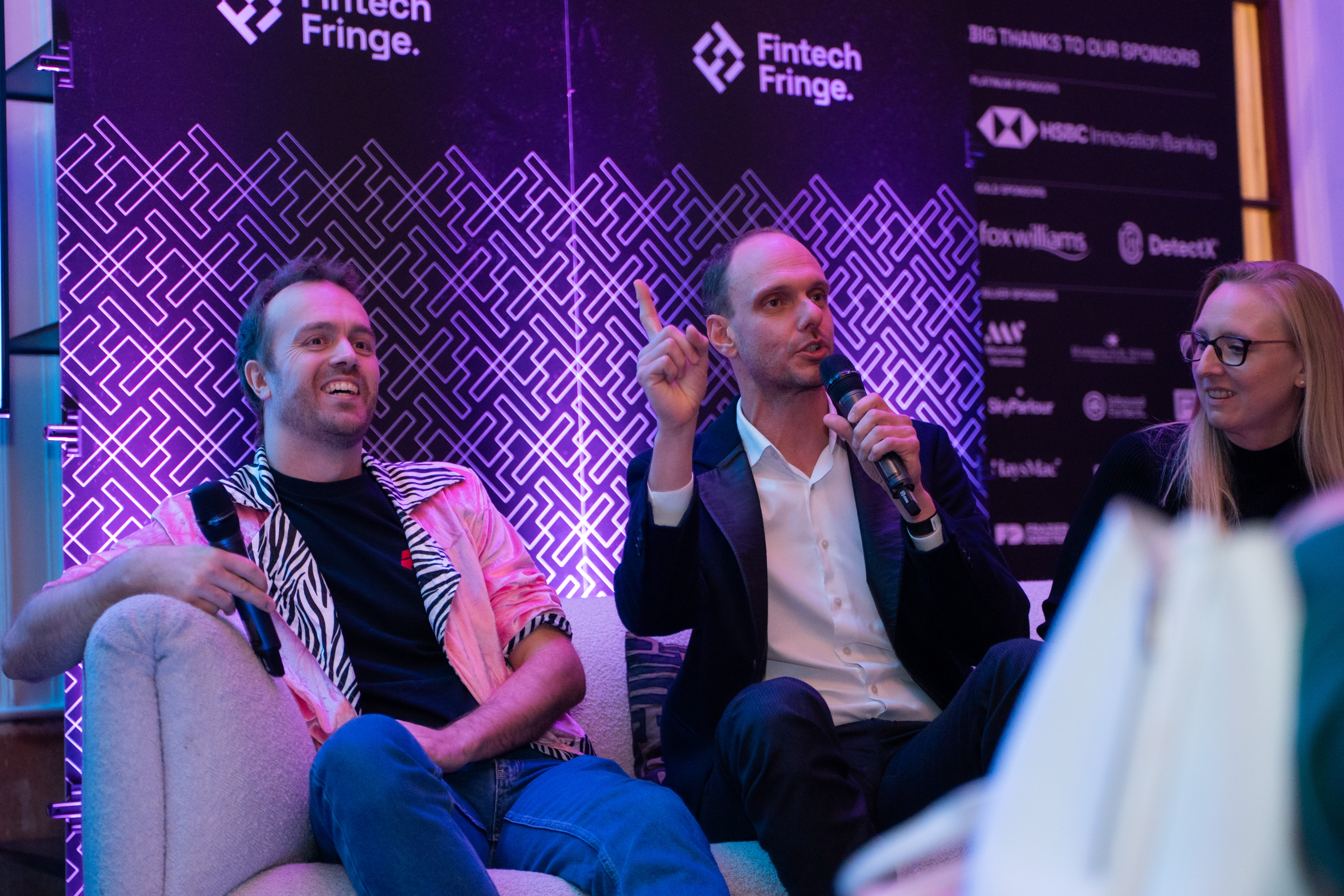
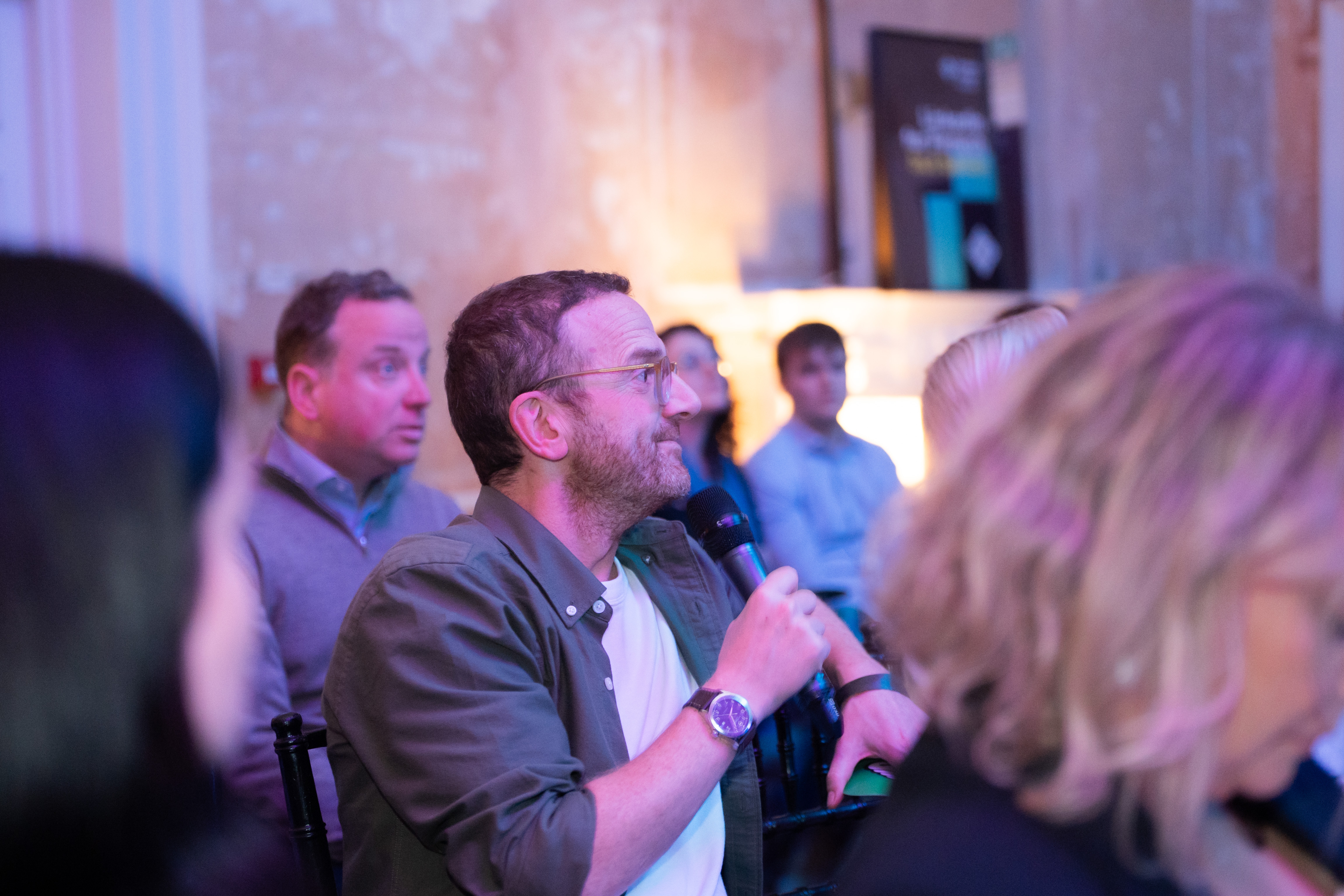
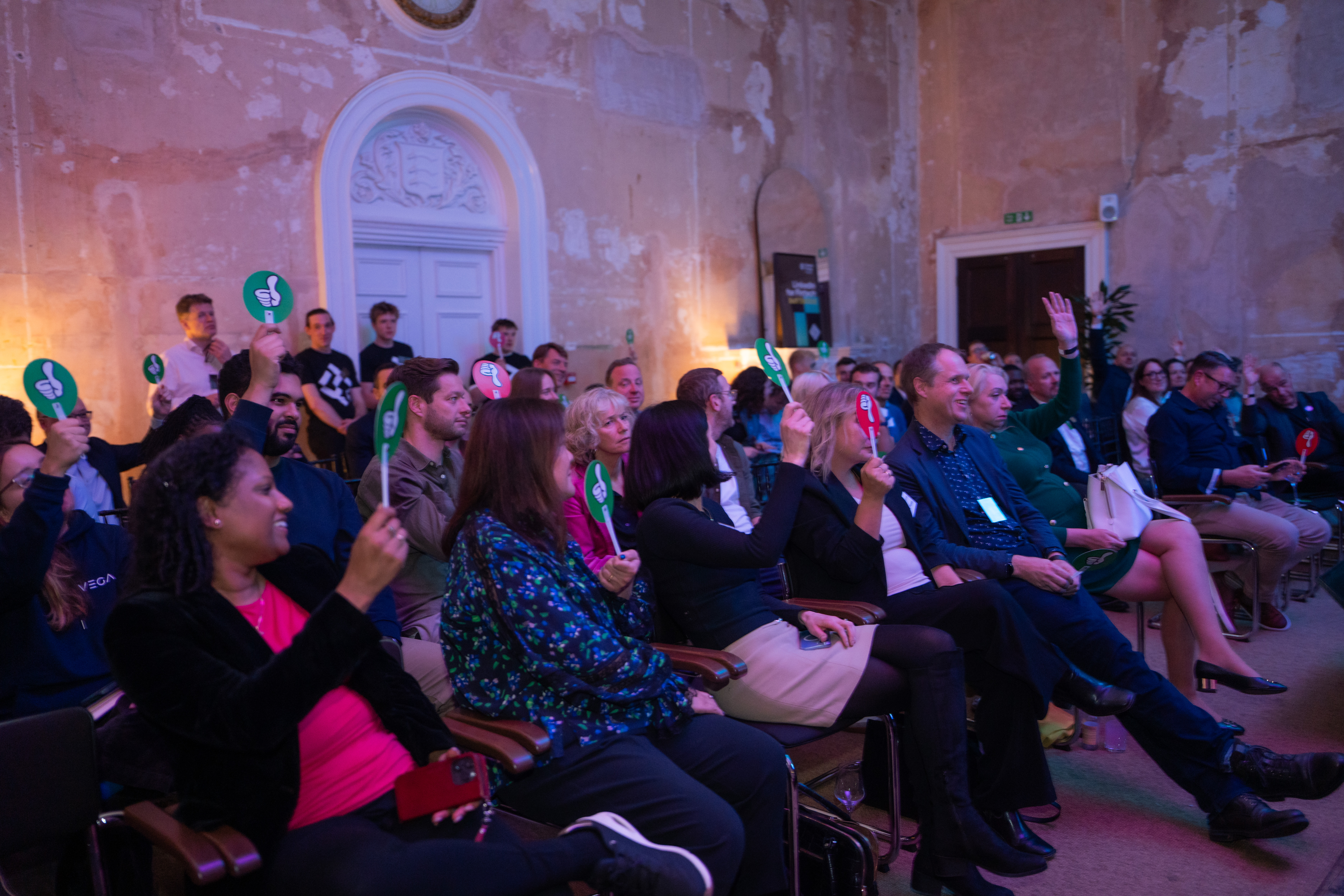
Hosted by Ian Horne, acclaimed writer and fintech’s closest thing to a Graham Norton-style ringmaster, the night leaned unapologetically into theatre - but with substance. Against a backdrop of great tunes, a cocktail trolley delivered a round of lethal negronis to an already amped stage of provocateurs. A squeaky rubber duck got plenty of squeezes and a lively audience heckled loudly using oversized thumbs to show their support for and against.
Saturday Night Live for fintech - but with teeth.
Underneath the spectacle, though, was something serious: big ideas being stress-tested in public.
The Format (And Why It Works)
The structure is intentionally simple:
Two teams. Opposing views.
Three motions tackling fintech’s most divisive fault lines:
Agentic AI
Crypto
Stablecoins
No digital polling - just red hands, green hands, and public accountability.
Heckling encouraged. Audience participation required.
One winner. One duck. Eternal bragging rights.
Strip everything back, and all that’s left is the argument - and the courage to make it.
Debate One: “In Five Years, All Banking Customers Will Be Bots”
This wasn’t really a debate about chatbots.It was a debate about who banks are actually building for.
Proposition: Team Blue
Led by Laura McCracken, with Nathalie Oestmann and Alistair Brown
Team Blue argued that humans won’t disappear - but they won’t be the interface either.
In five years, banks won’t primarily serve people. They’ll serve agents acting on people’s behalf.
Their case rested on three forces.
Behaviour
Consumer comfort with AI is already here. Around 60% of consumers say they’re open to an AI financial assistant, and a growing minority already use AI tools for money management. If people trust bots for emotional support at 2am, trusting them to manage direct debits at 2pm isn’t a leap - it’s a settings toggle.
Economics
Agentic AI isn’t a “nice to have”. Contact-centre trials already show cost reductions of around 50%. In a margin-compressed industry, that’s survival economics. As Laura put it:
Spreadsheets don’t have feelings - CFOs do.
Experience
Agents don’t sleep, forget, or procrastinate. They can compare markets, move savings, refinance loans, dispute charges, and switch providers in milliseconds. APIs replace phone calls. Humans still own the money - but the “customer of record” becomes software.
“If a bot can manage your feelings,” one line landed hard,
“it can manage your utilities bill.”
Opposition: Team Pink
Ali Paterson, Lucy Heavens and David Barton-Grimley pushed back hard.
Money is emotional. When fraud hits, when someone dies, when a mortgage wobbles, people want people. Regulators will demand explainability and accountability. Cash still exists. And making “the customer” a bot creates a brand-new attack surface for fraud.
The future, they argued, is human-led, agent-assisted - not bot-only.
The room split almost 50/50. Exactly the point.
Debate Two: “It’s Too Late for the UK to Catch the Crypto Train”
This debate exposed a deeper anxiety than crypto itself.
Proposition: Team Pink
“Yes - the train’s gone.”
The argument was blunt. Network effects have already compounded elsewhere. Talent, liquidity, developer ecosystems and founder gravity cluster in the US, APAC and parts of Europe. Years of policy whiplash and banking friction pushed founders away.
You can’t speed-run network effects. The UK didn’t miss a product cycle - it missed the platform moment.
Opposition: Team Blue
“No - plenty of track ahead.”
Team Blue reframed the question entirely.
Maybe the UK didn’t miss the train. Maybe it skipped meme season and waited for the express.
The speculative coin era is fading. The next phase is about real-world assets, compliant custody, payments, identity and institutional infrastructure - areas where the UK’s strengths matter: capital markets, rule of law, fintech density and distribution.
Regulatory clarity, they argued, can itself be a product.
“This isn’t missing the train,” Laura concluded.
“It’s waiting for the one that actually makes money.”
Heckling peaked. Audience votes were razor-thin.
Debate Three: “Stablecoins Are the Future of Money”
This was the most technically sophisticated - and philosophically divisive - debate of the night.
Proposition: Team Blue
“Yes - this is the rail.”
Stablecoins are nearing $300bn in market cap and growing fast. They offer T+0 settlement, 24/7 availability, programmability and vastly improved cross-border UX. For SMEs and emerging markets, they already outperform legacy rails.
Stablecoins, the argument went, aren’t consumer products - they’re infrastructure.
“Money just got an SDK.”
Opposition: Team Pink
“No - important, but not the future.”
Governments won’t outsource monetary policy or AML to private issuers. Caps and ring-fencing will limit ubiquity. Retail adoption is overstated. Cards and instant payments already work well enough for most people.
And operational risk remains real.
“If a single fat-finger can mint $300 trillion,” came the line,
“maybe don’t call it the future of money just yet.”
The audience vote tipped - narrowly - in Team Blue’s favour.
Why This Worked
The Great Debate landed because it did three things fintech events rarely do:
1. It trusted the audience
No slides. No spoon-feeding. People were asked to think - and change their minds in public.
2. It rewarded strong opinions
Not hot takes for clicks, but well-argued positions backed by data, experience and conviction.
3. It made fintech fun again
Music. Laughter. Heckling. Cocktails. All without diluting substance.
People stayed. They debated afterwards. They quoted lines the next day. And they all asked the same question:
“When are you doing this again?”
That’s how you know the format works.

So when is the next one?
We just got accepted to run ‘The Great Debate’ at Money2020 in Amsterdam and we’re on the lookout for one lucky team member to join the debacle.
Want to apply?
For Money20/20, we are levelling up. We have our ringmaster, we have our format, and we have three of our heavyweight debaters ready to go.
Now, we are looking for our fourth speaker to complete the line-up.
We aren’t looking for a "panellist." We aren’t looking for a corporate spokesperson. This is a European-wide search for someone who can hold their own on the biggest stage in fintech.
We are looking for someone who is:
Provocative & Informed: You don't just have an opinion; you have the data and the "scar tissue" to back it up.
Ballsy: You aren't afraid to go against the grain or call out a weak argument.
A "Strong Opinions, Loosely Held" Thinker: You can argue your point to the death, but you’re smart enough to evolve when the facts change.
Funny: You understand that a well-placed joke is often the most effective way to win an argument.
Ready to Stand Your Ground: You can handle a heckling audience, a squeaky duck, and a "Graham Norton" style interrogation without breaking a sweat.
Whether you are based in Paris, Berlin, Vilnius, Amsterdam, or beyond - if you think the current conference circuit is too quiet, we want to hear from you.
Email: calypso@fintechfringe.co