The Hidden Engine: Why the Best Scaling Journeys End in Founder Redundancy
Scaling to exit isn’t about hockey-stick graphs. It’s about building a business that no longer needs you – and a culture robust enough to carry the weight of the growth you’re chasing.
Scaling a fintech is usually sold through glossy headlines and steep growth curves. The reality is grittier: it’s the slow shift from hands-on builder to strategic custodian, and from doing the work yourself to making sure the work no longer depends on you.
The most counter-intuitive truth of a great scaling journey is that it ends with the founder becoming redundant – and that the engine carrying the whole thing isn’t the technology, but the culture underneath it.
“Success at GPS was not just about processing billions in payments. It was about building a culture that could withstand the pressure of high velocity. You have to pay your dues in terms of credibility with the regulators and the banks, but your internal culture is the only thing robust enough to support the weight of the growth you are chasing. If the culture is buggy, the business will crash regardless of how good the tech is.”
Joanne Dewar, Exited Founder and Project Nemo Lead
The redundancy metric
The boldest idea in Joanne Dewar’s leadership was the deliberate pursuit of founder redundancy. The urge to be in every decision is a hard habit to break, but that founder-first instinct is the single biggest bottleneck to real scale.
The shift is one of ego as much as structure. As a firm grows from fifty people to five hundred, the leader’s job moves from doing to synchronising – from being the answer to building the people who are.
“An exit is not an end point; it is a transition of custody. To scale a business to the point where it can be exited, you have to be willing to make yourself redundant. You have to hire people who are better than you are in every specific function and then give them the space to lead. If the business still relies on the CEO for every major decision, it isn’t ready to exit, and it certainly isn’t ready to scale into a global entity.”
Joanne Dewar, Exited Founder and Project Nemo Lead
Inclusion as a growth engine
Since exiting, Dewar has led Project Nemo, an initiative focused on disability inclusion across fintech. Her argument is commercial, not charitable: disability is the final frontier of diversity and a vast, untapped market.
It’s tempting to relax that commitment when the pressure to scale intensifies. The case here is the reverse – that’s exactly when it matters most, because an inclusive culture is a more resilient one, and resilience is what fast growth tests hardest.
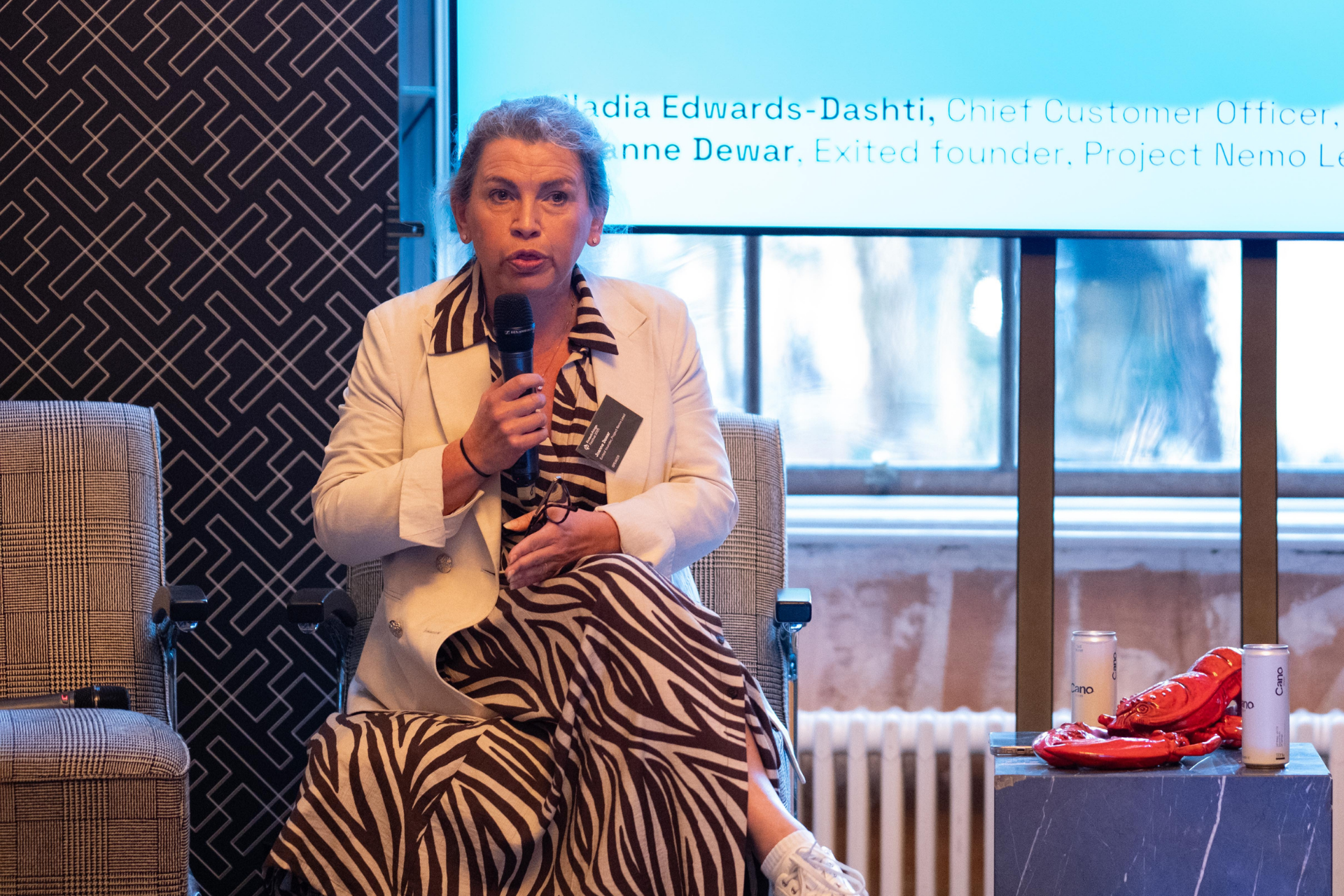
“Disability inclusion is often relegated to the CSR or HR bucket, but that is a mistake. 20 percent of the population has a disability. If your product is not accessible, you are ignoring a fifth of your potential market. Inclusion is a growth engine because it brings different perspectives into the room that allow you to solve problems in ways a homogenous team never could. It prevents the groupthink that leads to catastrophic errors during rapid expansion.”
Joanne Dewar, Exited Founder and Project Nemo Lead
The philosophy of invisible technology
Running a processing powerhouse, Dewar measured success by how invisible the product became. For any infrastructure-led fintech, the goal is for the customer to never have to think about the technology at all.
That’s the paradox of great plumbing: when it works, it disappears from the conversation, and the utility it enables becomes the headline instead. The brands built on top get to shine – which is precisely the point.
“The ultimate goal of any fintech should be utility. We spent years perfecting the plumbing so that the brands we supported, like Revolut and Starling, could build their incredible user experiences on top of it. When the technology works perfectly, it disappears from the conversation and the utility becomes the headline. That is when you know you have achieved true market fit.”
Joanne Dewar, Exited Founder and Project Nemo Lead
The takeaway
The road from startup to exit tests technical excellence and emotional intelligence in equal measure. The firms that make it treat culture and inclusion as infrastructure, not fluff. Build a leadership layer strong enough for the founder to step back, make the product accessible to the whole market, and growth turns into something more durable than a graph: a legacy.
The Scaling Checklist
Run a redundancy audit. Ask whether the business could survive a three-month absence of the founding team, then delegate three decisions you currently own to a direct report this month.
Take the accessibility test. Review your roadmap through the lens of disability – is your interface usable by the fifth of people with visual, auditory or motor impairments?
Treat culture as infrastructure. Audit psychological safety with the same rigour as your API docs, so the people closest to the problems feel safe raising them.
Plan for the next custodian. Think about succession early; a clean exit needs a self-sustaining business, not a cult of personality.
Lead with the who, not the how. When customers take the technology for granted and only talk about their results, you’ve hit the scaling sweet spot.
Use inclusion to kill groupthink. Hire senior people from outside your bubble to bring the constructive friction that real innovation needs.
These perspectives are drawn from a Fintech Fringe session on scaling and exiting, with Joanne Dewar (exited founder, former CEO of Global Processing Services / Thredd, and Project Nemo lead) in conversation with Nadia Edwards-Dashti.
Get Involved with Fintech Week London
Attend • Exhibit • Speak • Sponsor • Host
Scaling to exit is one of the conversations on the Built to Scale track at this year’s Summit, themed Growth + AI. Fintech Week London runs 7–11 September: five days across the city, built around the two-day Summit on 9–10 September, where founders, investors, operators and regulators come to connect, collaborate and do business in the world’s number one fintech ecosystem.