Why the Plumbing is Now the Headline
Agentic AI, a wave of M&A and stablecoins quietly rewiring the money stack. Here’s what’s in, what’s out, and why the boring infrastructure is the real story.
The most useful read on fintech’s future comes from people who watch the trends for a living. A “passing of the torch” conversation between Ian Horne and Oliver Smith – the former and current heads of content for Money20/20 Europe – did exactly that, moving quickly past generic innovation talk and into the pragmatic reality of M&A, stablecoin plumbing and agentic systems.
For two seasoned trend-spotters, the challenge is no longer finding the new thing. It is identifying which innovations have moved past the hype and into the infrastructure – the point at which something stops being a headline and becomes the plumbing everything else runs on.
Beyond autocomplete: the move to action
The biggest shift in the AI conversation is the move from generative systems that suggest text to agentic systems that execute tasks. As Ian Horne puts it, the highest praise for modern tech is when it becomes invisible.
“For me, the big compliment on content this year was someone saying they did not even notice where the AI or the blockchain was. It has just become part of the plumbing. We can talk until the cows come home about AI being transformational, but what I really want to get into is what is actually happening here.”
Ian Horne, Author of Why DeFi Matters
That practical application is exactly where banks are putting their energy – not in the demo, but in the launched feature.

“What happens when AI does not just ask, but acts? We are speaking to banks hard at work on agentic features. Think about your mortgage: instead of a manual journey, an AI agent pulls together the documentation and summarises it for a human decision maker. We are looking for practical use cases that have actually launched, not just hype.”
Oliver Smith, Head of Content, Money20/20
The great rebundling and the M&A wave
For years the fintech story was about unbundling the bank: pick one service and do it better than the incumbents. That trend is officially over, replaced by a great rebundling as firms race to build new financial empires – and a wave of consolidation to match.
“We have seen a wave of fintech M&A over the last six months. According to Sifted, there have been 94 deals so far this year, up from 76 the previous year. The biggest players are deepening their product offerings. Kraken, for example, is no longer just an exchange: they are doing stablecoin payments and tokenised equities. They are becoming mature, larger presences.”
Oliver Smith, Head of Content, Money20/20
Stablecoins and the rewiring of the stack
Not long ago, blockchain was routinely dismissed as a fad. Today it has become the silent engine for global settlement – the logical conclusion of a decade of experimentation, and a quiet rewiring of the money stack.
“I remember people coming up to me saying 'crypto is dead, why are you doing this?' or 'blockchain is a fad.' But stablecoins have pulled crypto from the periphery into the centre of the institutional conversation. It is no longer a fringe topic: it is about speed and the opportunity to move away from noisy speculation toward utility.”
Ian Horne, Author of Why DeFi Matters
The institutional appetite for these rails has arrived suddenly, and with it a reframing of compliance as a competitive edge rather than a cost.
“Nine European banks, including ING, recently launched their own stablecoin coalition. Compliance has become a strategic advantage: if you can be on top of this regulation, you are winning.”
Oliver Smith, Head of Content, Money20/20
The future of identity and the fraud tax
The awkward growth areas that will dominate the next stretch are digital identity and the rising tide of fraud. Both are uncomfortable to put on a marquee, and both are where some of the fastest growth is happening.
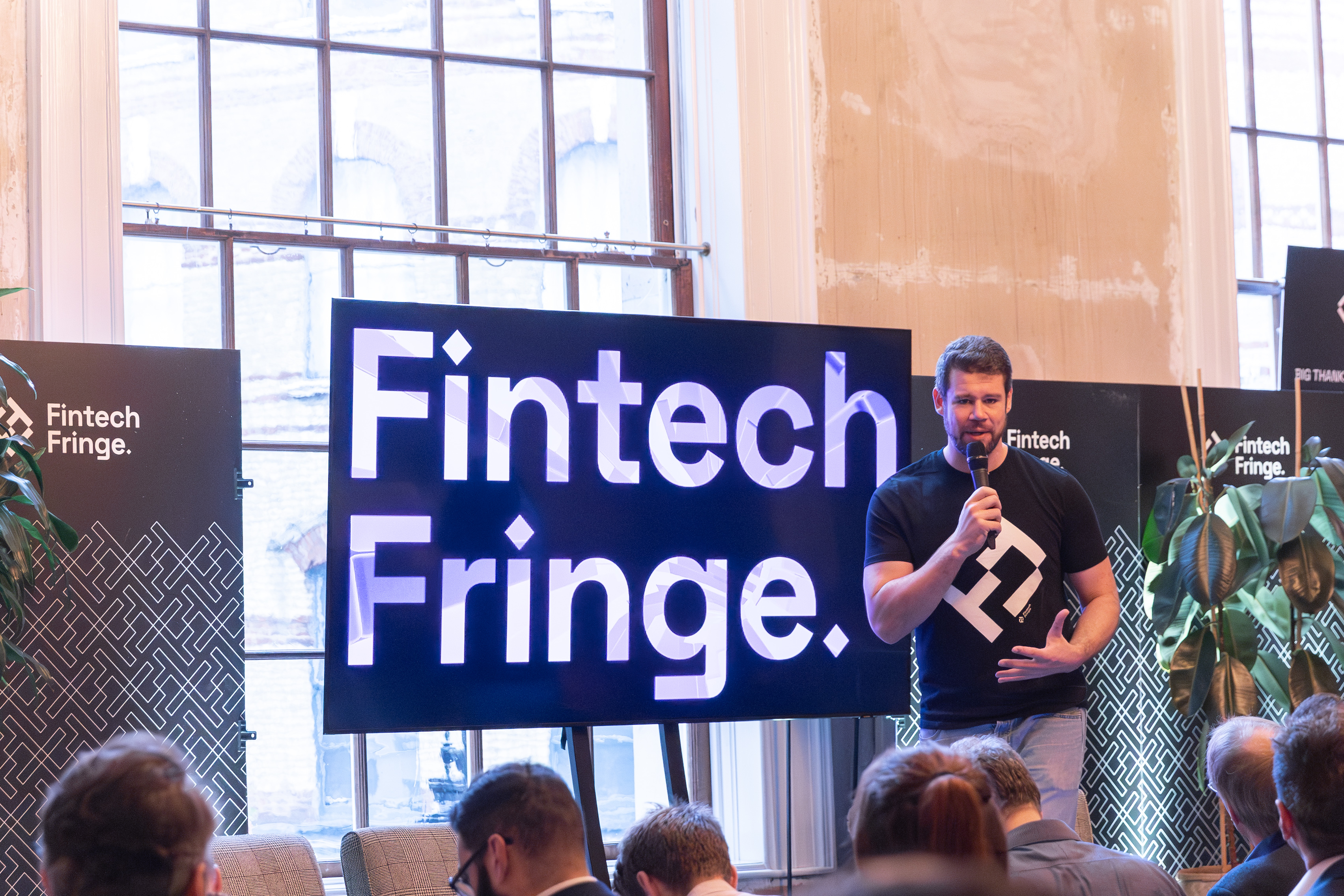
“I think the privacy conversation has become so much more important. We have effectively given up on our data rights and our privacy, and I wonder if that is one of those things that will come back round as digital identity projects finally begin to move forward.”
Ian Horne, Author of Why DeFi Matters
Ironically, fintech’s success at making payments instant has also handed criminals a faster playground.
“In Europe, we have been so good at faster payments that we have opened the doorway to fraudsters. Fraud is the crime of Europe right now. It is an awkward topic to headline an event with, but the companies solving that through AML and anti-fraud tech are growing at incredible speed.”
Oliver Smith, Head of Content, Money20/20
The takeaway
The future of fintech is becoming less about disruption and more about integration. The trends that matter are the ones that solve the friction of the last mile – AI agents handling mortgage admin, stablecoins settling cross-border trades. The winners will be those who treat compliance and identity not as hurdles, but as the foundations of a scaling strategy.
The Scaling Checklist
Run the autopilot test. If your AI strategy is stuck in autocomplete, pick one manual, multi-step process and map how an autonomous agent could handle it.
Audit for rebundling. As the market consolidates, ask whether you’re a vulnerable single-feature startup or building the distribution that makes you an essential partner.
Treat compliance as a moat. In a world of instant-payment fraud, your ability to prove security is your most valuable sales tool, not a cost centre.
Choose originality over echoes. Focus on learning by doing – share data on launched products and real implementation, not speculative roadmaps.
Prepare for the intelligent internet. Start thinking about how your product looks when a machine, not a human, is the one making the purchasing decision.
These perspectives are drawn from a Fintech Fringe session on fintech’s future, a conversation between Ian Horne (author of Why DeFi Matters) and Oliver Smith (Head of Content, Money20/20).
Get Involved with Fintech Week London
Attend • Exhibit • Speak • Sponsor • Host
Fintech’s future: what’s in, what’s out is one of the conversations on the The Convergence track at this year’s Summit, themed Growth + AI. Fintech Week London runs 7–11 September: five days across the city, built around the two-day Summit on 9–10 September, where founders, investors, operators and regulators come to connect, collaborate and do business in the world’s number one fintech ecosystem.