The End of the TradFi/Crypto Divide
DeFi was supposed to overturn traditional finance. Instead, the two are merging – and the partnerships getting it right are the ones solving for privacy, not just transparency. Here’s what convergence looks like when a regulated bank puts it into production.
For most of the last 15 years, the crypto story was a story of replacement. Decentralised finance was a response to the perceived failings of the traditional system – a way to open up access for the billions shut out of the formal economy, and to take power away from the institutions that held it.
That framing has quietly expired. The conversation now is about convergence: regulated banks borrowing blockchain rails, and blockchain builders designing for the way regulated finance actually works. The question has shifted from “which side wins?” to “what does each side need from the other?”

“The conversation was about when decentralised finance was going to overturn traditional finance and democratise access to money. Right now, that conversation, I think, is dead in the water. We’re now talking about the convergence of these two worlds. I never thought this would happen, but it’s happening now.”
Georgia Hanias, Ecology Media
Why transparency kept institutions out
Bitcoin proved a trustless, peer-to-peer network could run around the clock on cryptographic truth. Ethereum added programmability; the next generation – Polkadot, Cardano, Solana – chased scale and interoperability. Mass adoption still didn’t follow.
The blocker for institutions is simple: every public chain shows everything. Midnight positions itself as a fourth-generation, programmable privacy blockchain – one where users keep their data private but can prove what they need to, from accreditation to age to the assets they hold, through selective disclosure to a regulator or a counterparty.
“I spent 20 years in the hedge fund world. We’d trade assets globally, settle those assets, margin those assets and leverage those assets, and it was all between us – nobody else knew. Whereas in every blockchain today, the weakness is they are all transparent, and big institutions aren’t going to put their assets there.”
Fahmi Syed, President, Midnight Foundation
Private chains just build new silos
The obvious objection from banks is: why not build our own private blockchain? Many have tried. Internal ledgers work well for tracking intercompany balances – HSBC tokenised gold for clients who never knew a blockchain sat underneath. But Maersk’s attempt to put clients and suppliers on a private chain failed, and even the strongest bank-built networks are, in the end, intercompany ledgers.
The problem arrives the moment they step outside. Tokenised assets and stablecoins live on public chains, and every bridge between a private network and a public one leaks data or metadata – enough for someone to spot that a major bank has just placed a deposit from its “anonymised” wallet.
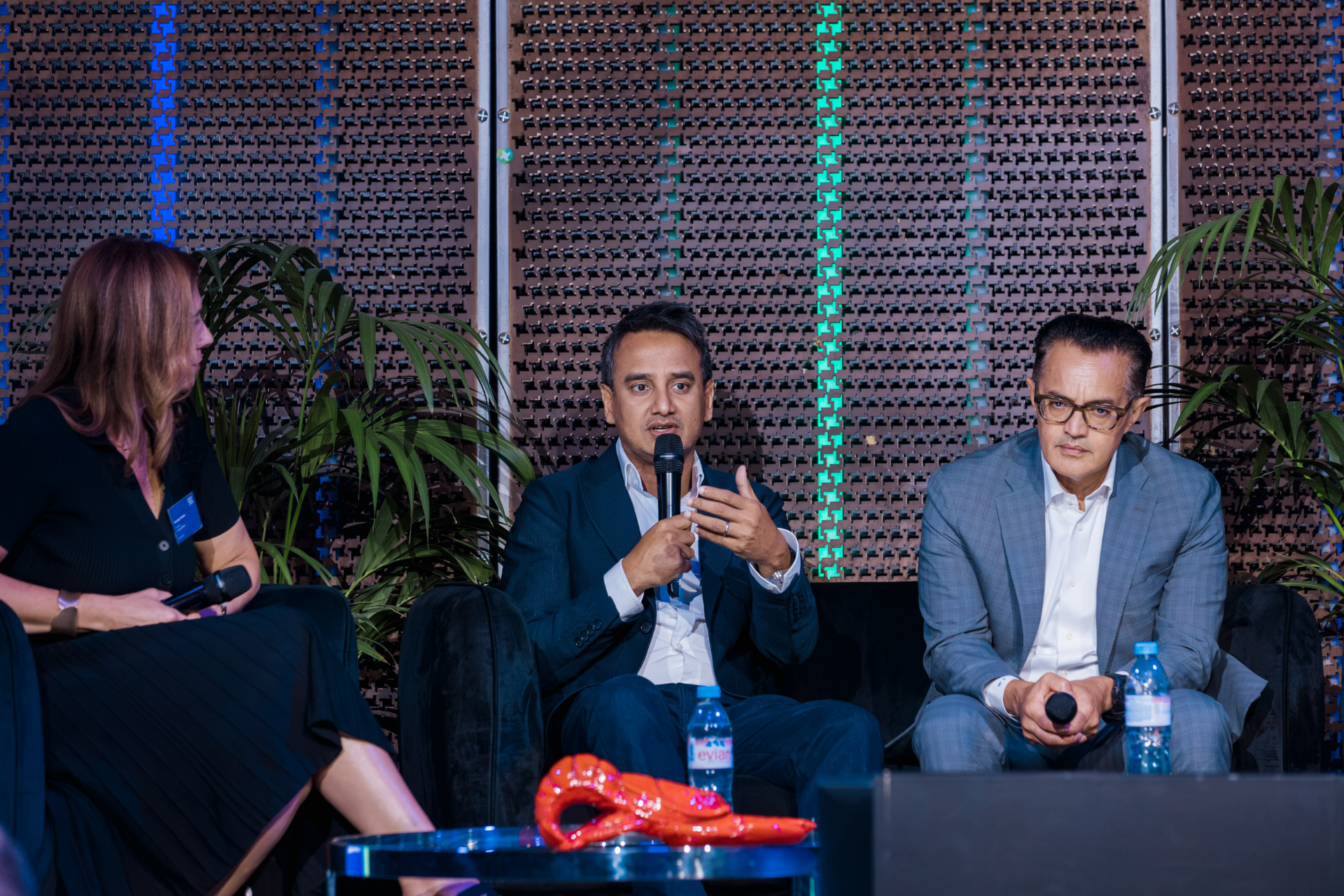
“The whole idea of blockchains is they’re meant to be decentralised. Once you create a private blockchain, you are entrusting your data over to somebody else. You don’t need a blockchain for that – you already have centralised servers and databases.”
Fahmi Syed, President, Midnight Foundation
Why convergence is happening now
The technology has been around for 15 years and has earned trust. What changed is the policy backdrop. US regulators have moved from enforcement through litigation to rules that bring crypto back onshore, and stablecoins and tokenisation are now seen as strengthening the dollar and US Treasuries. For banks, that has opened the door to tokenised treasury flows and 24/7 banking.
But waiting for permission is not how the builders see their role.
“I was on a panel with three banks who told me they could only proceed with innovation because regulation allowed them to. I was quite saddened by that. As fintech builders, we’re not led by regulation – we lead with thought and innovation, and then we lobby regulators to fall in line. We’re often ahead of regulation.”
Fahmi Syed, President, Midnight Foundation
A live case study: Monument and Midnight
Monument Bank serves a group it believes traditional banks neglect: business owners, entrepreneurs and professionals with moderate wealth and very little time. Four and a half years in, its balance sheet stands at around £7.5 billion, having reached £5 billion in 36 months.
Its goal is to democratise private wealth. Private equity funds typically demand tickets of half a million to two million. Tokenised and fractionalised, the same exposure can be offered in £1,000 to £10,000 subscriptions, with draw notices, distributions and NAV calculations visible in an app. The fund going onto the platform has a historical return of around 12 percent, against roughly 2.5 percent net from the best UK savings accounts.
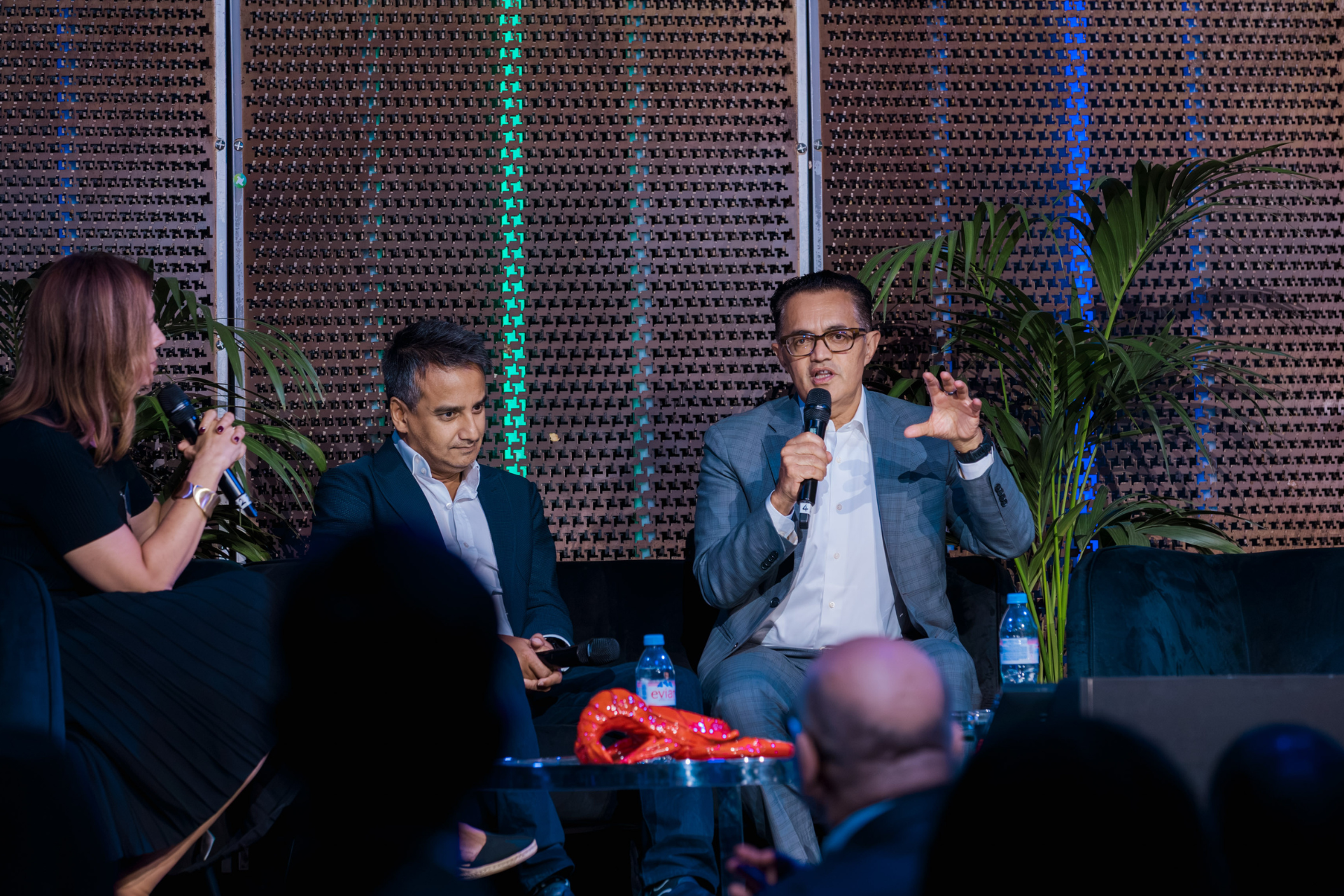
“With the technology we have today, we can fractionalise, unitise, tokenise those assets down to £1,000, £5,000, £10,000 subscriptions – what I would call a retail-ready level of liquidity. There are lots of assets the mass market has not had access to, and we’re using technology to correct that injustice.”
Mintoo Bhandari, Founder, Monument Bank
The rollout runs in three phases. First, with Bank of England approval, Monument will tokenise an initial £250 million of cash deposits onto Midnight, in a sovereign zone where the bank decides who sees what. Second, issuers and tokenisation platforms will bring fractionalised private equity, treasury and hedge funds into that zone. Third comes Lombard lending: a private vault where clients can borrow against tokenised and traditional assets alike – the kind of leverage the wealthy have always used. Clients, by design, won’t see the blockchain at all.
“For Monument’s clients, their traditional assets are on there, their tokenised assets are on there. The fact Midnight is there, they don’t even need to know. Good technology is invisible.”
Fahmi Syed, President, Midnight Foundation
Privacy is the missing layer
Stablecoins are booming, but they mostly sit on public chains – and that creates problems no regulated business can live with. Pay a team in stablecoins and anyone can see who earned what. Midnight’s answer is private payments from a private vault, with tax deductions made and disclosures available to a regulator or tax authority when required.
“At the water cooler you’d talk about the weekend, who won the football, maybe even the office romance – but you’d never talk about how much you got paid. It’s the one taboo. And yet with stablecoins, everybody gets to know what you get paid. Put all your data on a public blockchain and you’re just not going to get mass adoption.”
Fahmi Syed, President, Midnight Foundation
Frictions, not stoppers
Convergence is incremental work for a regulated bank. Partnerships stretch beyond the two names on the press release: Monument is not a digital custodian and doesn’t want to become one, so it needs institutional-grade custodians – and there aren’t many.
Those custodians have spent 15 years treating compliance as transparency, following every transaction on a public chain. The partners are now working with one that can attest to the provenance of funds without disclosing the amount.
“Because we are a regulated entity, we’ve got to do everything really smartly, sequentially, safely. So it’s never as fast as I want it to be. Things have come up that I’d call frictions on our velocity – not game stoppers, but things that have slowed us down a little.”
Mintoo Bhandari, Founder, Monument Bank
Legacy is the real divide
In five years, the panel expects a more efficient, lower-friction system with fewer intermediaries and more value for the consumer. The cloud-native cohort – Monzo, Starling, Nubank, Revolut and now Monument – will get there first. Incumbents will struggle, and many will resist.
“99 percent of the banks in the world are in Y2K. They’re still running COBOL mainframes with middleware and green screens – and then they have an app, so they say: we’re super digital. But the reality is they’re struggling with legacy architectures going back to the 1960s and 70s that they cannot leave.”
Mintoo Bhandari, Founder, Monument Bank
The takeaway
The TradFi/crypto divide is closing not because one side won, but because each has something the other needs. Banks bring trust, licences and customers; blockchain brings programmable money, fractional access and 24/7 settlement. What makes it work in production is privacy – selective disclosure that satisfies regulators without exposing clients – and technology that stays invisible to the people using it.
The Scaling Checklist
Solve for privacy, not just transparency. Institutions won’t put assets on chains that expose every position. Build for selective disclosure – private by default, provable on demand.
Don’t build another silo. A private chain is just a database until it has to talk to the outside world – and that’s where data leaks. Plan for interoperability from day one.
Build at the intersection of cloud, blockchain and AI. That convergence is what the next generation of financial institutions will look like – and good technology should be invisible to the customer.
These perspectives are drawn from the Convergence fireside “The End of the TradFi/Crypto Divide”, moderated by Georgia Hanias (Ecology Media), with Fahmi Syed (Midnight Foundation) and Mintoo Bhandari (Monument Bank).
Fintech Week London 2027
Fintech Week London returns 20-24 September 2027: five days across the city, built around the two-day Summit on 21-22 September, where founders, investors, operators and regulators come to connect, collaborate and do business in the world’s number one fintech ecosystem.