The Art of the "Small Yes": Turning Data into Dialogue
Insights from the March edition of Scale & Grow. Session delivered by Jeremy Basset, Founder, Super Benji
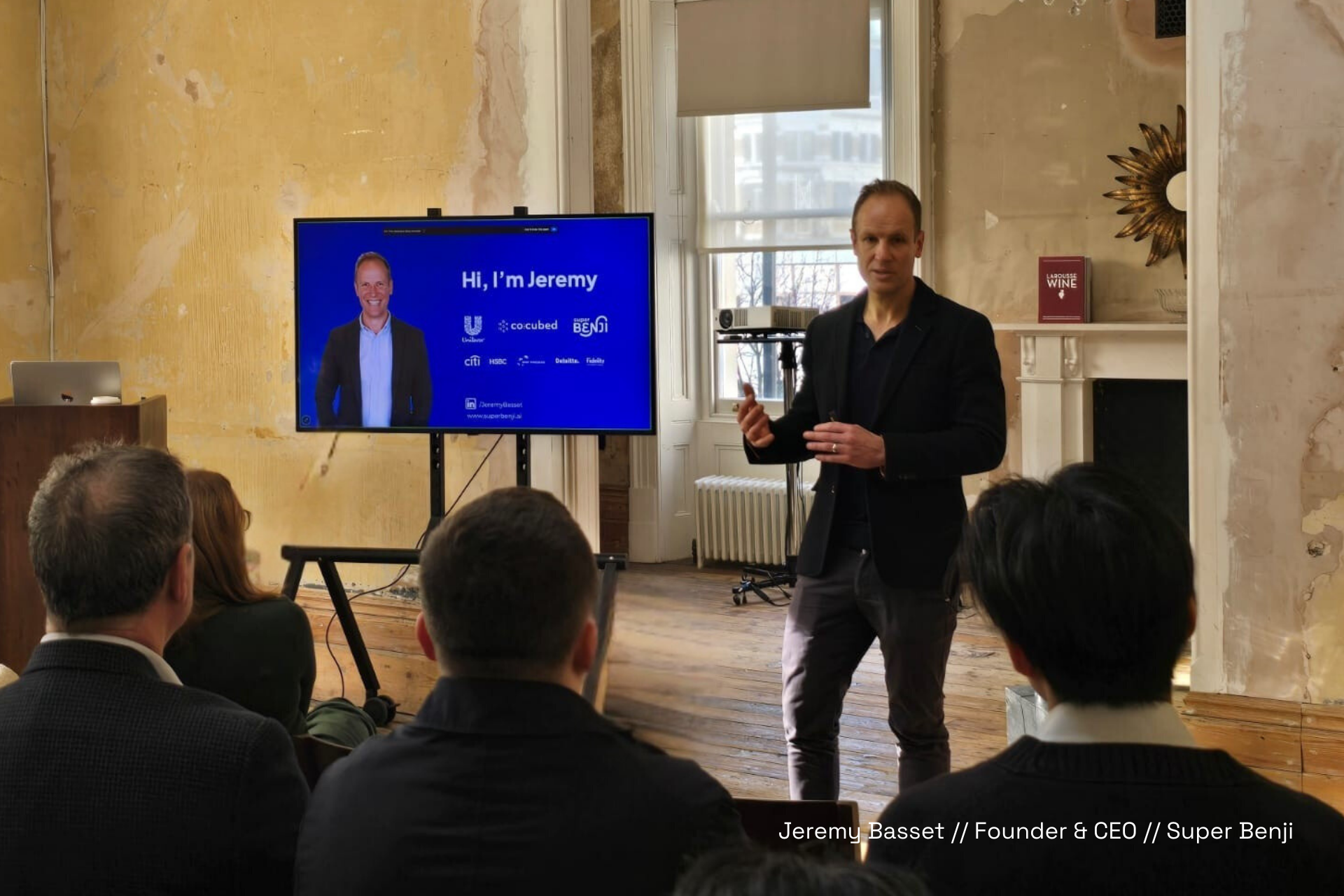
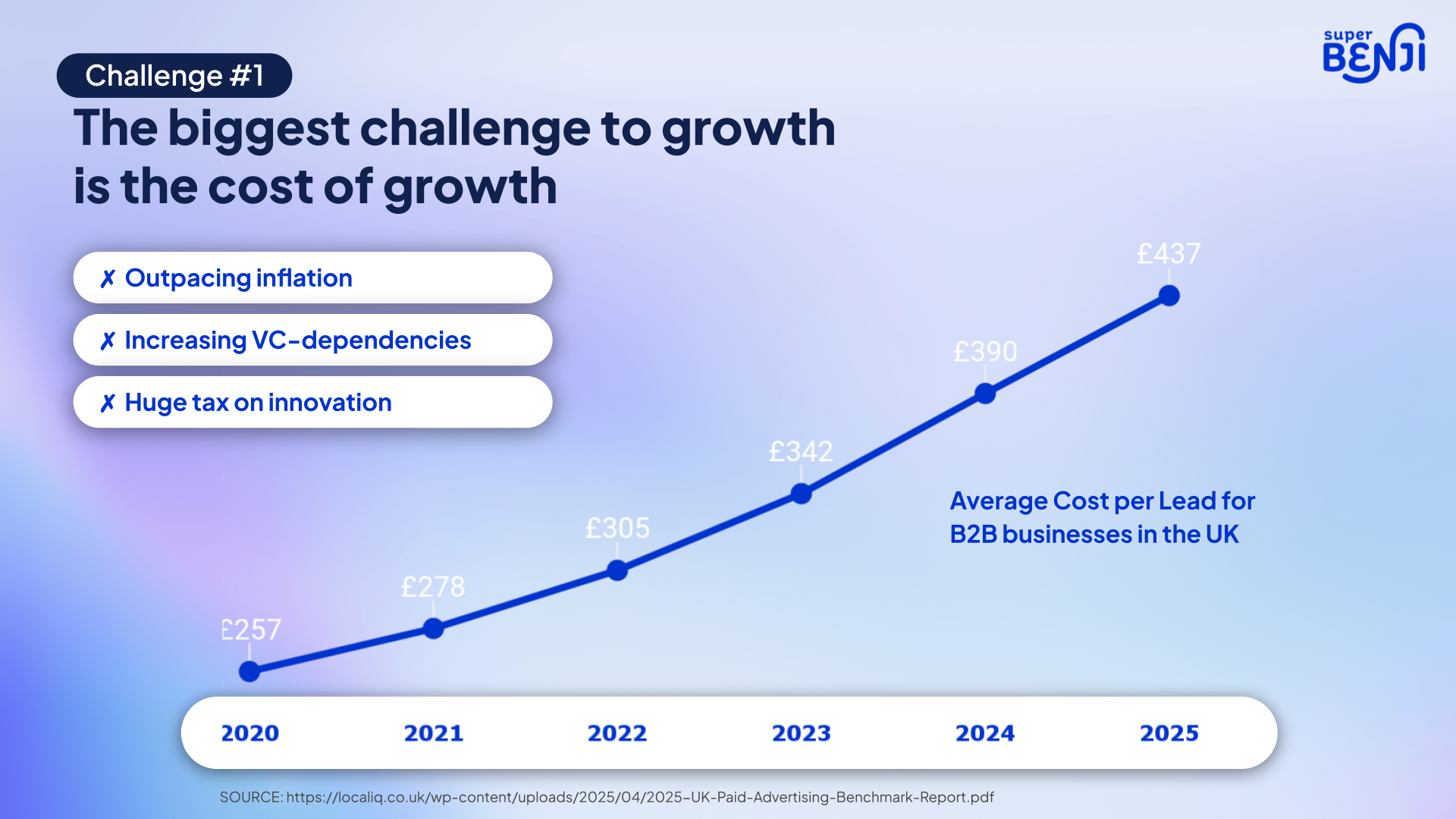
There is a growing paradox in B2B Fintech growth: we have more data and automation tools than ever before, yet response rates are cratering.
As Jeremy Basset, former Global Innovation Director at Unilever and founder of Super Benji, noted, the duopoly of Google and LinkedIn ads is becoming prohibitively expensive, and email spam filters are aggressively (and rightfully) shutting down generic "spray and pray" cadences.
With over 300,000 outbound messages sent via his platform resulting in an industry-defying 10.5% positive reply rate, Basset’s philosophy is clear: you must pivot from transactional cadences to relational engineering.
The Death of "Show Me You Know Me"
For years, sales leaders pushed the "Show Me You Know Me" tactic. SDRs were trained to scour a prospect's LinkedIn, find a personal detail (e.g., a recent skiing trip or a podcast appearance), and awkwardly bridge it into a pitch for SaaS or debt financing.
Basset argues this is fundamentally broken, especially when selling to enterprise banks or Tier 1 financial institutions. It feels jarring, manipulative, and deeply irrelevant. The new standard is "Show Me You Are Relevant."
Your outreach must connect public data signals - annual reports, strategic shifts, or regulatory filings - directly to the specific business problem your Fintech solves.
The "Small Yes" Calibration
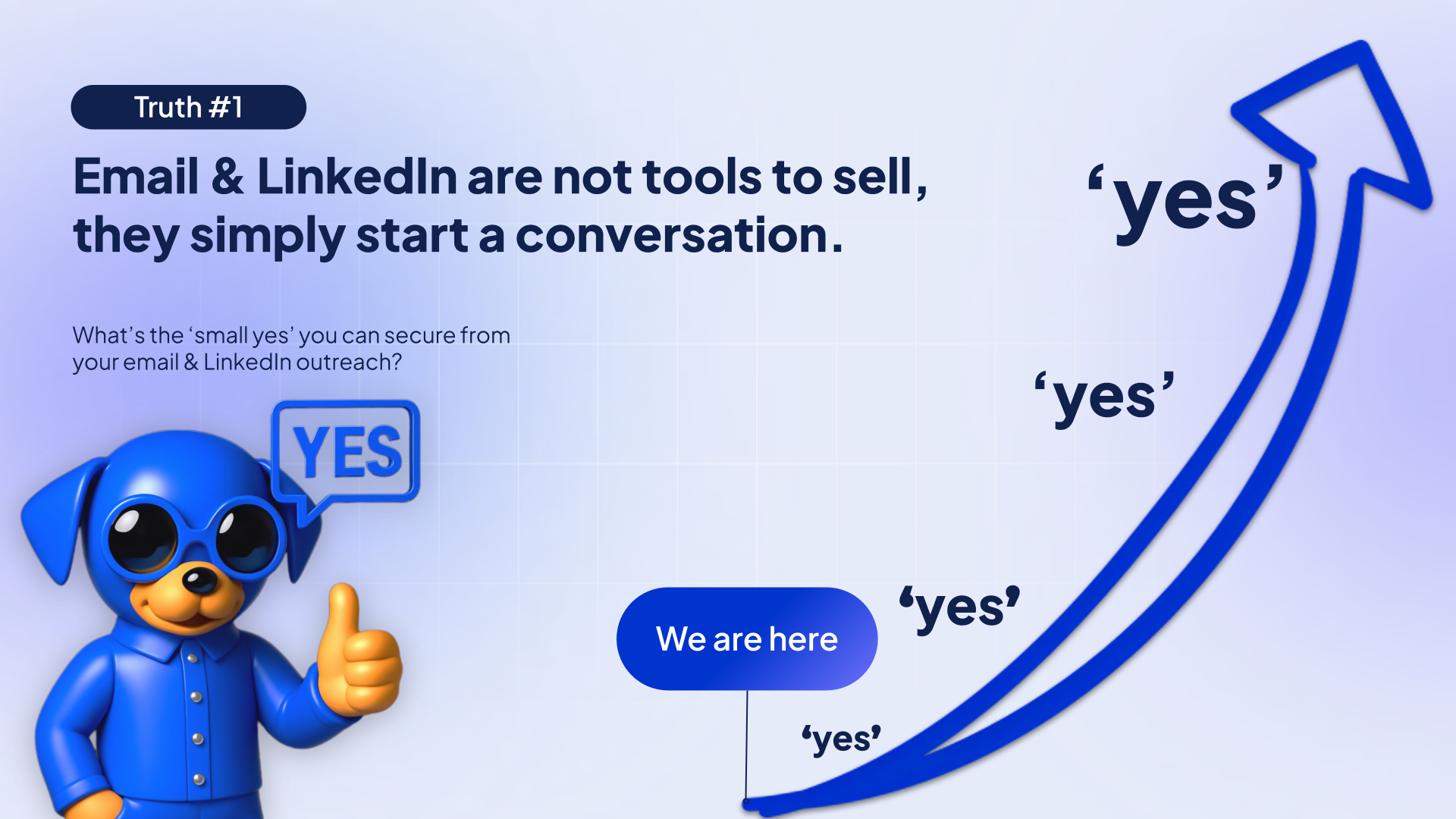
Sales is a seduction process, yet most outbound emails ask for a contract (or a demo that leads to one) in the very first interaction. Basset insists that the only objective of top-of-funnel email or LinkedIn outreach is to secure a "Small Yes."
You are not asking them to buy; you are asking them to agree to a dialogue. If you are in a highly competitive market (like outsourced development, lead generation, or standardized SaaS), direct product pitches will be ignored. You must deploy a "Relational Approach."
The "No-Date" Trojan Horse
Basset shared a masterclass in behavioral economics regarding event-based outreach. A highly effective way to get a "Small Yes" is to invite a senior prospect to a peer-to-peer roundtable or lunch discussing a niche industry challenge.
However, the mechanical trick is never include a date or venue in the initial invite. (e.g., "We are putting together a small peer-to-peer lunch for Heads of Compliance sometime in May/June...").
If you include a date, the prospect’s default defense mechanism triggers: "I'm busy that day." By removing the date, they are forced to evaluate the value of the topic itself. Once they reply with a "Small Yes" (e.g., "Sounds interesting, keep me posted"), the trap is sprung. You immediately transition to a discovery call: "Great. Let's have a quick 15-minute chat so I can understand what you're working on, to ensure I bring you into the conversation properly at the lunch."
You have now successfully engineered a discovery call without ever sending a pitch deck.
The Scaling Checklist
The "Small Yes" Audit: Review your current outbound messaging sequences. Are you asking prospects to commit 30 minutes to a product demo in email one? Re-engineer your Call to Action (CTA) to ask for permission to share a highly specific, relevant insight or case study.
The Relevancy Mandate: Ban personal "Show Me You Know Me" icebreakers. Implement a systemic process (human or AI-driven) to scan a target account's recent public filings, press releases, or hiring trends, and strictly tie your outreach to those business signals.
The Relational Event Play: Design a peer-to-peer roundtable concept for your absolute highest-tier ICP. Deploy the "No-Date" strategy in your outreach. Use the expression of interest to secure immediate discovery calls under the guise of "curating the guest list."
The Anti-Spam Long Game: Treat your Total Addressable Market (TAM) as a finite resource. Do not burn your domain reputation on generic blasts. Ensure every message leaves a net-positive brand impression, even if they don't reply, because B2B sales cycles often take 6 to 18 months to mature.
Ready to turn insight into action?
Get in touch: jeremy@superbenji.ai