Super Wallets: "The Next Frontier in Digital Payments"
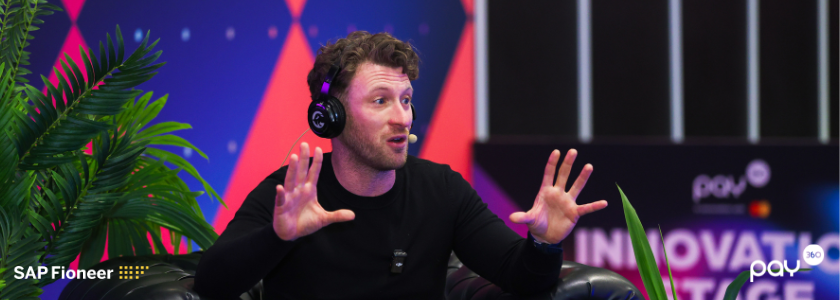
Sponsored by SAP Fioneer, rock-solid technology to empower banks, insurance companies and challengers to grow and transform at scale and speed.
Hosted on the Innovation Stage at Pay360 by Fintech Fringe, this session explored the evolving world of AI-powered digital wallets, also dubbed 'super wallets'. The panel examined what’s next in wallet technology, how AI is being embedded, and whether consumers are truly ready to centralise their financial lives.
Moderated by award-winning journalist Elizabeth Lumley, the session featured:
Martin Masser, Head of Growth, TON Foundation
Lynne Lagan, Head of Merchant Services Lab, Lloyds Banking Group
Edoardo Volta, SVP Partner Marketing and Business Development, Curve
From Multi-card to Multi-life
Edoardo Volta kicked off by framing Curve as the first financial app that consolidates all your payment cards and methods into one interface.
“We turn the card payment upside down, the idea is to create an overlay onto your payment foundation that allows you to capture the transaction and provide more value to our consumer. Not just in the payment, but also in the consolidation of financial services and potentially moving beyond financial services, moving into the identity services and so on.”

AI Meets Wallet UX
Martin emphasised how AI will simplify the crypto experience:
“AI can turn a crypto wallet into your personal assistant, just tell it to buy the top 10 trending coins and sell when they hit 10% profit,”
Martin called current crypto interfaces 'Web3' and predicted AI would usher in 'Web4', a user-friendly, intuitive layer.
Lynne noted that banks are exploring AI both for fraud prevention and deeper personalisation:
“When you bring more services into one app, you learn more about your customer. That drives more data, more engagement, and smarter product design,”
Edoardo added:
“From a Curve point of view, it's taking your spend analysis and turning that into, for example, a shopping assistant that knows what you buy, where you are, and what your style is..”
Trust, Security and Simplicity
The panel reflected on the tension between convenience and risk.
“The easier it is, the better … People are used to using ApplePay already, so there's not a big leap to go from ApplePay to a full life wallet”
Martin Masser, TON Foundation
Lynne warned that perception often outweighs reality when it comes to consumer trust:
“People used to tape their plastic card to the back of their phone but thought Apple Pay was less safe,” she joked. “Perception is reality for customers.”
She stressed the need to ring-fence parts of the ecosystem and manage security 'tentacles' across all providers feeding into the wallet.

Who Owns the Customer Experience?
The panel agreed that Big Tech sets the benchmark for wallet UX.
“If I don’t see Apple Pay or Google Pay on a checkout page, I walk away. They’ve built that much trust,”
Martin Masser, TON Foundation
Edoardo added:
“You can’t beat Apple’s UX unless you match it—and then add something extra.”
Lynne highlighted Apple’s tight ecosystem control as a competitive advantage: “The more you own that experience end-to-end, the more you direct the user journey.”
What Consumers Want and What They Fear
When asked whether consumers really want everything in one app, the panel offered different takes.
Martin argued for simplicity:
“We don’t carry notepads anymore. We use Apple Pay because it’s easier. A super wallet should feel the same.”
Lynne offered caution:
“The more you combine, the greater the consequences if it’s breached. People feel safer when parts of their digital life are ring-fenced.”
Edoardo summarised:
“Convenience always wins—but security must keep up.”

The Challenges Ahead
For Lynne, the core challenge is aligning trust, regulation, and user experience:
“Whatever the brand on that wallet, if something breaks three links down the chain, it’s your brand that loses trust.”
Martin said the key for crypto wallets is awareness and muscle memory:
“Once people find it and use it, adoption follows—but you’ve got to build that habit.”
Edoardo stressed ongoing innovation:
“There’s no arrival point. Super wallets must evolve constantly—keeping users engaged and fraudsters out.”
Key Takeaways
AI will reshape wallet UX from spend insights to real-time shopping assistance.
Consumers want seamless experiences but trust and security must scale with convenience.
Super wallets must offer more than consolidation they need to predict, personalise, and protect.
Apple Pay and Google Pay have set the bar fintechs must innovate beyond slick UX.
Adoption depends on trust, habit, and perceived value not just features.