Fintech fundraising in 2026-2027: capital is flowing, but the bar remains high
UK fintech companies raised $791 million across 51 funding rounds in Q3 2026. At DealFlow LIVE, investors explored what that activity means for founders, how AI is changing the opportunity and what it takes to secure backing heading into 2027.
For fintech founders looking towards 2027, the fundraising picture is more complicated than a simple recovery story.
Fintech remained a significant destination for UK venture capital in the third quarter of 2026. According to HSBC Innovation Banking and Dealroom’s UK Innovation Update, Q3 2026, the sector attracted $791 million across 51 funding rounds, ranking second by investment value behind telecom.
UK venture investment: top three sectors by value, Q3 2026
Telecom: $1.2 billion across 5 funding rounds
Fintech: $791 million across 51 funding rounds
Security: $778 million across 28 funding rounds
Source: HSBC Innovation Banking / Dealroom, UK Innovation Update, Q3 2026, page 9. Figures cover July to September 2026 only.
The figures show that fintech continues to attract substantial capital. They also illustrate why investment totals alone do not tell the whole story: telecom attracted more funding through far fewer rounds, while fintech recorded considerably more transactions than either of the other two leading sectors.
For founders, however, sector-level activity is not the same as an easy raise. Investors can remain active while being highly selective about which teams, business models and stages they back.
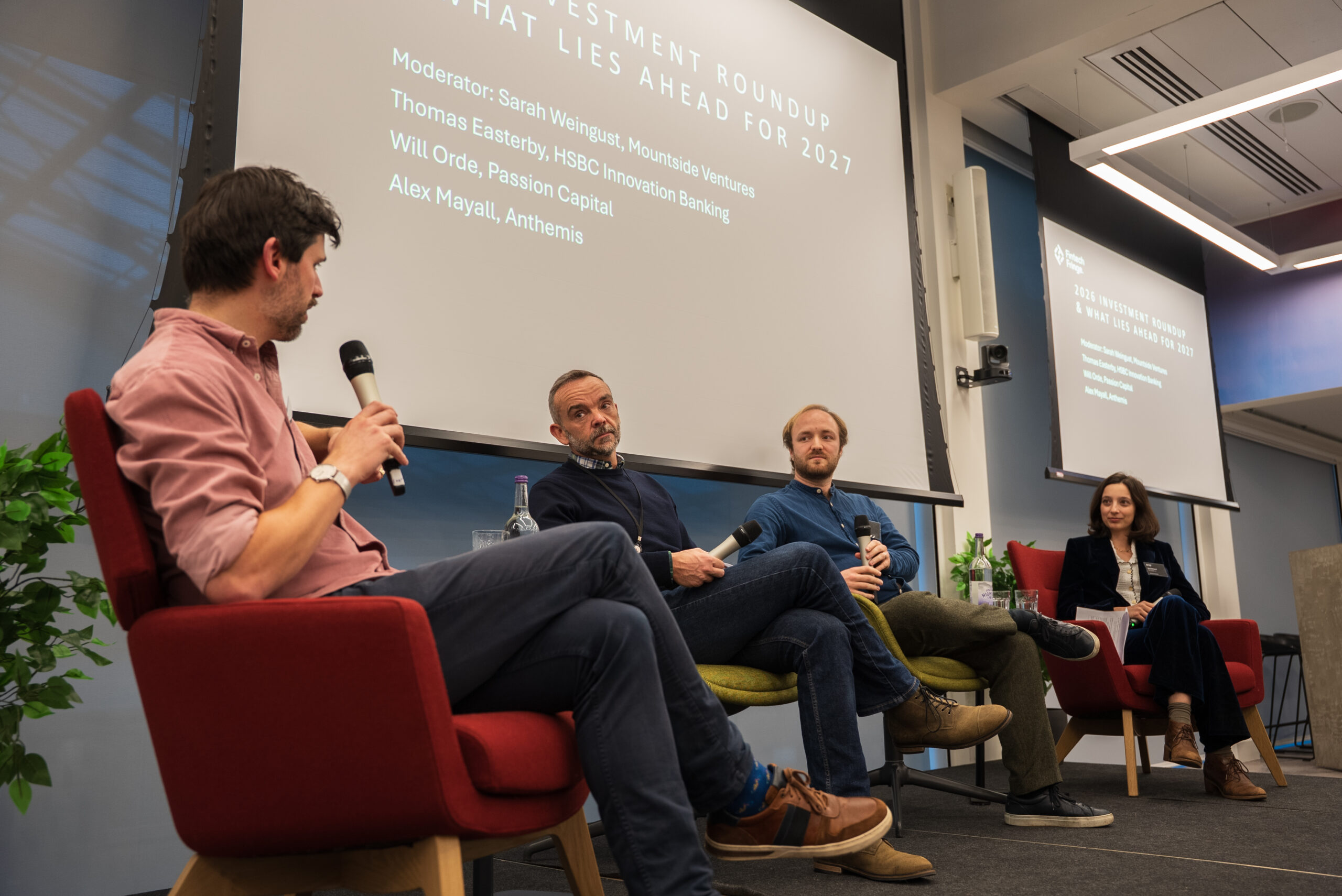
That distinction shaped the discussion at Fintech Fringe’s DealFlow LIVE on 18 November 2026, where Sarah Weingust, Senior Manager at Mountside Ventures, moderated a panel with Will Orde, Partner at Passion Capital; Alex Mayall, Investment Principal at Anthemis; and Thomas Easterby, Head of FinTech, Venture & Growth Banking at HSBC Innovation Banking.
The conversation explored how AI is reshaping investment opportunities, why fundability changes by stage and what founders need to demonstrate as they head into 2027.
AI is changing the competition for capital – and what fintech founders can build
Fintech’s position among the leading sectors in Q3 provides an important counterweight to a narrative of capital simply moving elsewhere.
The question is not whether investors have stopped backing fintech. It is how their priorities are changing, and which propositions can command their attention.
During the panel, Easterby described a crowding-out effect in which generalist investors may direct capital towards AI, deep tech or critical infrastructure rather than other opportunities. That can make competition for investment more demanding without making fintech itself uninvestable.
Nor are AI and fintech mutually exclusive categories.
“It’s not mutually exclusive saying fintech and AI.”
Sarah Weingust, Mountside Ventures
AI can change the economics of delivering financial services, automate workflows that previously required extensive manual intervention and enable new ways for customers to interact with their money. Agentic commerce, digital assets and financial infrastructure all featured in the discussion.
The overlap also complicates funding comparisons. A business applying AI to financial services might be classified as fintech, enterprise software or AI, depending on the dataset.
For founders, the implication is not to chase whichever label currently attracts the most capital. It is to explain what becomes possible for customers because of the technology.
Does it remove a costly process? Make a previously inaccessible service viable? Allow a business to serve customers that existing providers struggle to support?
Those are stronger foundations for an investment case than an AI label alone.
Fundability depends on the stage – not a universal checklist
One of the clearest distinctions was between the risks investors are willing to take at different stages.
In his investor introduction, Orde described how Passion Capital’s approach can begin at day zero. At that point, a company may not yet have a product, revenue or regulatory permissions in place.
“No need for product, no need for revenue, no need for regulation, nothing at all.”
Will Orde, Passion Capital, describing the firm’s day-zero investment approach
This concerns when Passion may invest, not whether businesses need the permissions required to operate. At such an early stage, the investment case rests heavily on the founders: their insight, ambition and ability to build.
Anthemis’s seed-stage approach, outlined by Mayall, expects more evidence. A product, some traction and typically non-zero revenue help demonstrate that a proposition is beginning to translate into a business.
Mayall’s introduction also explained the firm’s decision to concentrate on that stage:
“We worked out that our seed investments did best, and that was what we were the best at, so we doubled down on that.”
Alex Mayall, Anthemis
These approaches reflect different investment mandates, not conflicting definitions of a good company.
A pre-seed investor may be comfortable backing a team before the product exists. A seed investor may want evidence that customers will use it. As the business matures, the questions become increasingly grounded in commercial performance and execution.
For founders, that makes investor targeting a strategic exercise rather than a volume exercise.
A fintech specialist is not automatically the right investor for every fintech. Stage, cheque size, portfolio fit and appetite for particular risks all matter. “Come back with more traction” may indicate that the business is too early for that fund, rather than that the opportunity is unconvincing.
A harder market does not necessarily mean cheaper deals
If fundraising feels difficult, it might seem logical that valuations should fall.
The panel challenged that assumption.
Investors can become more cautious about which companies they will back while remaining highly competitive around a smaller group of the best opportunities. The result is a market in which many founders find raising harder, but the most sought-after businesses retain negotiating leverage.
The distinction is between the availability of capital across the market and investor demand for an individual company.
For founders, broad statements about a “good” or “bad” funding environment are therefore only part of the picture. The more immediate question is whether the business can become a priority for the investors it is approaching.
That requires more than describing a large market. It means making a clear case for why this team is equipped to win, what evidence supports the proposition and what the next round will enable.
The practical lesson is not to manufacture urgency. It is to prepare thoroughly, engage relevant investors and run a coherent process in which the opportunity is easy to understand.
AI is accelerating diligence – but clarity still wins
AI is influencing fundraising on both sides of the table.
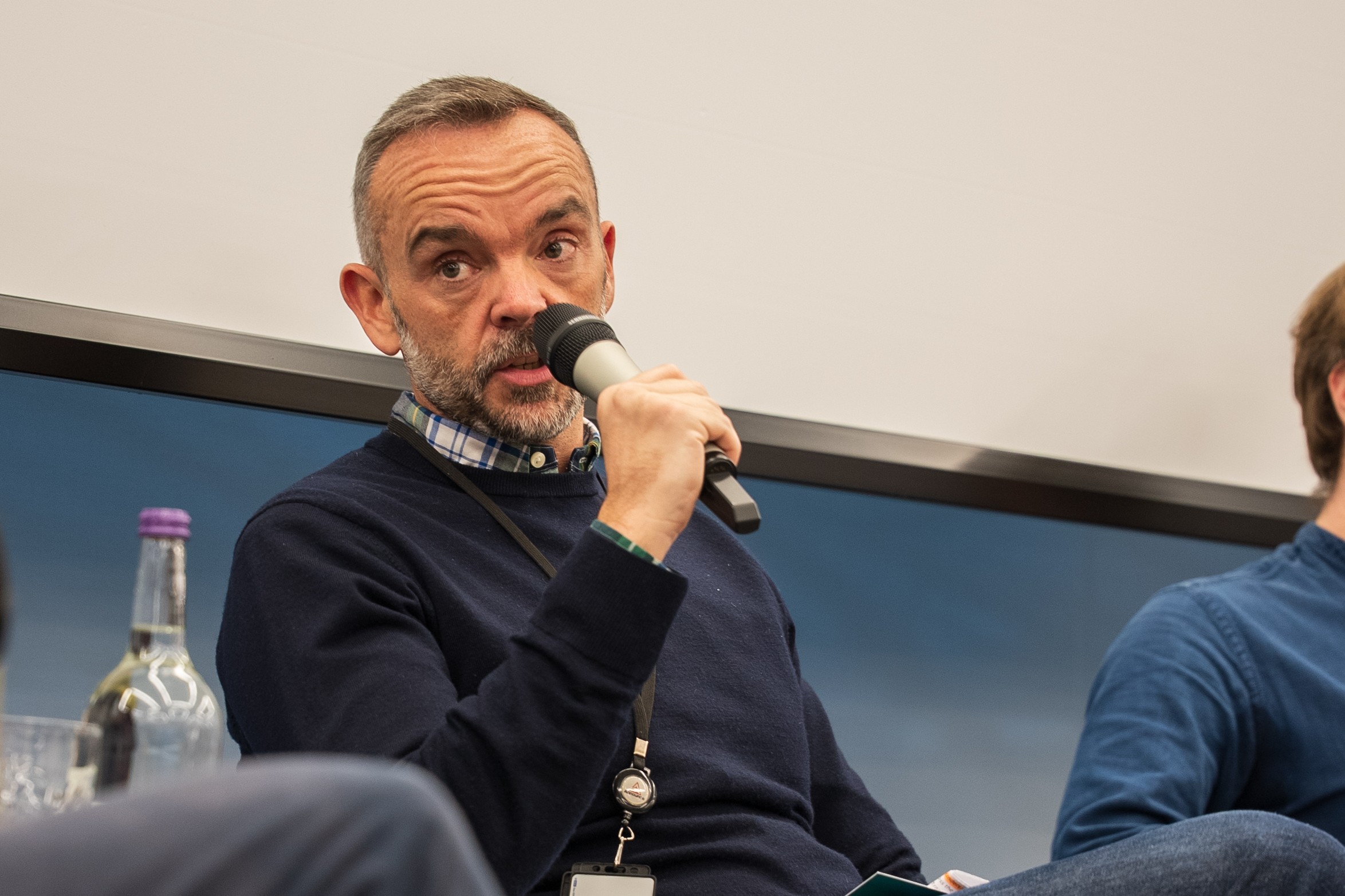
Weingust raised the growing volume of diligence questions founders encounter, alongside increasingly lengthy responses. Tools that make it easier to analyse a deck also make it easier to generate another list of questions. Founders, in turn, can produce more material in response.
But more output does not necessarily mean better understanding.
The discussion highlighted the value of a well-organised data room and information prepared before a raise begins. When investors can locate clear answers themselves, founders spend less time responding to repeated requests.
That preparation is more than administration. It demonstrates how well a team understands its business.
Are the metrics consistent? Can the founders explain their assumptions? Do the financial model, commercial narrative and use of funds support one another?
AI can help organise information, identify gaps and improve clarity. It should not become a substitute for understanding what has been sent.
Every answer remains something the founding team needs to substantiate and defend. A concise explanation grounded in the business is more valuable than pages of polished language that leave the central question unresolved.
Repeat-founder experience can strengthen the case
An audience question addressed a concern familiar to many founders: how do investors view a previous startup that did not succeed?
The discussion recognised the value of prior experience, including the learning and resilience that can come from difficult outcomes. Weingust’s follow-up account also recorded positive responses from both Orde and Mayall to repeat-founder experience.
That does not make failure an automatic credential, or success a guarantee of future performance.
The important question is what the experience demonstrates. Has the founder seen what strong execution looks like? Have they navigated difficult decisions? Can they explain what went wrong without avoiding responsibility, and show how their approach has changed?
For repeat founders, the strongest narrative is not simply “I have done this before”. It is a specific account of what they now understand about customers, teams, capital and execution.
Experience becomes valuable when it improves judgment.
Trust will determine how quickly AI opportunities become businesses
Much of the outlook for 2027 returned to AI. But the discussion was as much about adoption as technical capability.
An agent that can retrieve information is one proposition. An agent that can move money or act on a customer’s behalf is another.
Who has authorised the action? What limits apply? How is sensitive information protected? What happens if something goes wrong?
Easterby’s opening remarks captured the connection:
“Whenever we talk about agents, we also talk about trust.”
Thomas Easterby, HSBC Innovation Banking
For fintech founders, trust is not a communications layer added after the product is built. It is part of whether the product can be adopted at all.
Easterby also described banks experimenting with internal prototypes before deciding which external solutions they need. That creates a more demanding commercial environment for suppliers: an institution may recognise a problem and show interest in a technology without being ready to procure it.
Founders therefore need to understand the route to adoption as carefully as the use case itself. Who owns the problem? Who controls the budget? What do security and compliance teams require? How is an implementation decision reached?
A compelling demonstration is a starting point. A credible investment case also explains how that demonstration becomes a paying customer.
Break-even is not the same as long-term security
The panel raised another warning for more mature fintech businesses: reaching operational break-even does not necessarily remove strategic risk.
A company can become financially stable in the short term while lacking the resources to grow or modernise its technology. If newer competitors can deliver a stronger proposition using AI-native approaches, survival alone may not provide much protection.
That creates a different set of financing questions.
Does the business need capital to adapt? Can it continue growing independently? Would a partnership, acquisition or consolidation strategy create a more durable outcome?
The discussion identified potential for consolidation among mature businesses, particularly where combining companies could create a stronger proposition.
For founders, the lesson is that financial discipline and competitiveness need to be considered together. The goal is not simply to reduce burn. It is to preserve the ability to invest in what comes next.
What founders should take into a 2027 raise
The outlook from DealFlow LIVE was neither uniformly pessimistic nor indiscriminately optimistic.
Capital remains available, but it is selective. New technology creates opportunities, but it also changes competitive expectations. Ambition matters, but the evidence required to support it grows as a business matures.
For founders preparing to raise in 2027, the discussion points to seven priorities:
Target the right investors. Match the company’s stage and risks to the fund’s mandate.
Lead with customer value. Explain the problem being solved before the technology being used.
Show evidence appropriate to the stage. Make clear what has been demonstrated and what remains to be proved.
Prepare for diligence early. Keep metrics, assumptions and supporting information consistent.
Treat trust as part of the product. Address the controls and requirements that make adoption possible.
Connect the raise to milestones. Explain what the capital will achieve and how that advances the business.
Look beyond survival. Show how the company will remain competitive as technology and customer expectations change.
Q3’s funding figures show that fintech remains a significant destination for UK venture capital. The challenge for founders is to turn that sector-level activity into conviction about their own business.
The message heading into 2027 is not to be less ambitious. It is to connect that ambition to evidence, a credible commercial path and a clear explanation of what the next round will achieve.
These perspectives are drawn from the investor panel at DealFlow LIVE on 18 November 2026, with Sarah Weingust (Mountside Ventures), Will Orde (Passion Capital), Alex Mayall (Anthemis) and Thomas Easterby (HSBC Innovation Banking).