Beyond the Hype: Why the TradFi and DeFi Convergence is Finally Real
The conversation has moved from chatting about blockchain to operating on it. Here’s how traditional and decentralised finance are quietly converging into a single, faster system.
Fintech is often accused of operating in a hall of mirrors, where the same trends are reflected back until they lose all meaning. Lately the conversation has shifted from speculative hype to pragmatic execution. We are moving past the era of talking about blockchain and into the era of building on it.
Ian Horne, author of Why DeFi Matters, has spent years documenting the rise of decentralised finance, and notes that the industry has finally moved past the polarising nature of its early years. The plumbing, in other words, has started to disappear into the walls.
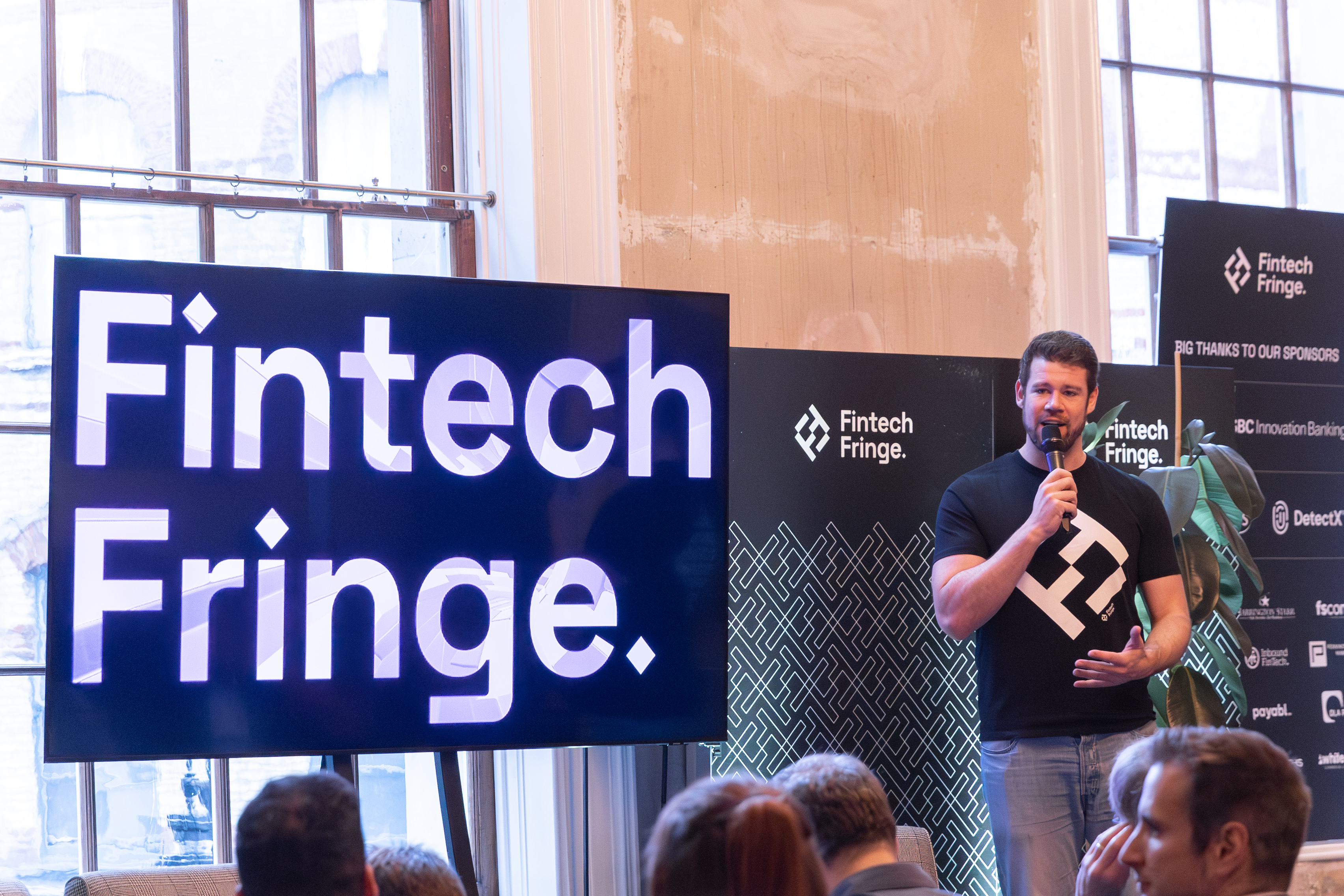
“For me, the big complement on content this year was someone saying they did not even notice where the AI or the blockchain was. It has just become part of the plumbing.”
Ian Horne, Author of Why DeFi Matters
The shift from trust to truth
Much of the industry fixates on the finance in DeFi. Fahmi Sayed of the Midnight Foundation argues the real revolution is in the data. For centuries, banking has run on trust: you trust the bank has your money, and they hand you an IOU in the form of a digital balance. The future, he believes, belongs to a model of truth.
This is about more than moving money – it is about the programmability of value. Smart contracts let firms automate margin calls and collateral management with absolute certainty, the foundation of an internet where machines and humans interact with verified data rather than mere promises.
“Blockchain technology allows a layer of truth as opposed to trust. In my hedge fund days, no bank saw my entire portfolio. If they did, it was with a thirty to sixty day lag. Decentralised technology allows for programmable contracts that share information on a ledger without the behest of a single controller. It provides a layer of truth that is immutable.”
Fahmi Sayed, President, Midnight Foundation
The institutional privacy moat
A major barrier to institutional adoption has been the inherent transparency of public ledgers. In traditional finance, total transparency is a liability – a large fund does not want its strategy, or its salary payments, visible to the world. The answer is to marry transparency for compliance with privacy for commercial protection.
Drawing on his research into digital identity, Ian Horne sees that privacy layer as the missing link – the piece that makes the next stage of growth possible.
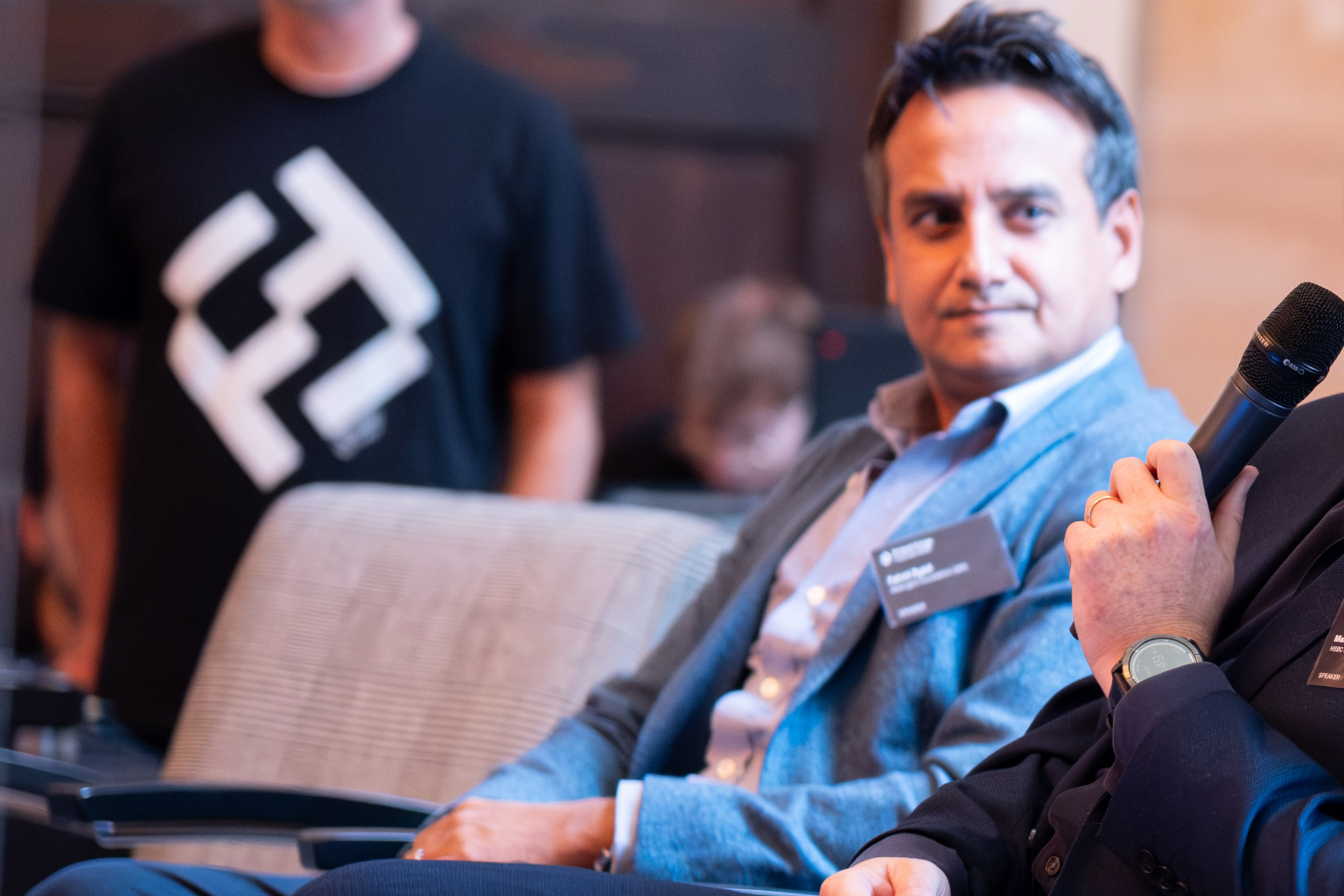
“My old hedge fund was not going to hold its portfolio on a public blockchain and expose its secrets to everyone. We use zero-knowledge proofs so that your data does not sit on the blockchain; only the proof of that data does. You can prove you have the collateral or the creditworthiness without actually revealing the sensitive underlying numbers.”
Fahmi Sayed, President, Midnight Foundation
The mahjong test: utility over complexity
Mark Williamson of HSBC offered the practical counterpoint to the technical theory. For him, the technology only succeeds when it becomes invisible. He pointed to HSBC tokenising physical gold bars as a model of real-world utility: by fractionalising a gold bar down to a thousandth of a troy ounce, a famously heavy asset becomes accessible to retail investors. His proof point was a ninety-year-old grandmother in Hong Kong.

“She does not care that it uses distributed ledger technology. She cares that she can own a piece of a gold bar with the click of a button and tell her friends at the mahjong club about it. The technology has enabled fractionalisation and democratisation, but the utility is what sold it.”
Mark Williamson, Managing Director and Global Head of FX & Commodities Partnerships & Propositions, HSBC Bank Plc
Escaping the digital islands
For all the progress, both Sayed and Williamson warned of the digital island risk. Many large banks are busy building private silos. If a tokenised asset at one institution cannot be used as collateral at another, the system stays fragmented and inefficient. The next few years need to be about standardisation and re-aggregation – a world where a user can reach tokenised gold, bonds and cash through a single aggregator, much like a pay-TV model for financial services.
“Today, we have a bunch of digital islands. If we cannot interoperate between these different blockchains and distribution channels, we haven't solved the friction.”
Mark Williamson, Managing Director and Global Head of FX & Commodities Partnerships & Propositions, HSBC Bank Plc
The takeaway
The convergence of TradFi and DeFi is no longer a fringe experiment. The focus has shifted to building institutional-grade rails that prioritise privacy, truth and interoperability – toward a world where there is simply finance, whether it sits on a legacy database or a decentralised ledger. The winners will be those who make the technology invisible while making the value accessible.
The Scaling Checklist
Run the utility audit. If customers need to understand blockchain to use your service, you have a design problem, not a technical one.
Build the privacy moat. Institutional clients won’t compromise on data privacy; investigate zero-knowledge proofs so you can prove truth without exposing sensitive portfolios.
Move beyond the island. Design your stack for interoperability from day one so your assets can move freely between different bank ledgers.
Focus on re-aggregation. The market is fragmented; there’s a real opportunity for fintechs that can act as the connective tissue between tokenised asset pools.
Prepare for T+0. A blockchain rail means a 24/7, instant-settlement world; audit your operations so they can keep up with a real-time ledger.
These perspectives are drawn from a Fintech Fringe panel on where TradFi meets DeFi, moderated by Ian Horne (author of Why DeFi Matters), with Fahmi Sayed (Midnight Foundation) and Mark Williamson (HSBC Bank Plc).
Get Involved with Fintech Week London
Attend • Exhibit • Speak • Sponsor • Host
Where TradFi meets DeFi is one of the conversations on the The Convergence track at this year’s Summit, themed Growth + AI. Fintech Week London runs 7–11 September: five days across the city, built around the two-day Summit on 9–10 September, where founders, investors, operators and regulators come to connect, collaborate and do business in the world’s number one fintech ecosystem.