Agentic AI: Moving from Auto-complete to Auto-pilot
Chatbots that summarise a document are old news. The scaling opportunity is in AI that takes a goal, plans the steps and gets it done – without you micromanaging every move.
Fintech has a bad case of chatbot fatigue. Most teams spent the last year building assistants that summarise a document or answer an FAQ, and few of them actually moved the business forward. The real opportunity is agentic AI: autonomous systems that take a high-level goal, work out the sub-tasks, and carry them out without constant hand-holding.
Breakfast, not ingredients
The clearest way to understand the shift comes from Simran Singh of the FCA. A basic AI agent is like a cook who has to be told exactly how to fry an egg, step by step. An agentic system understands that the goal is “breakfast” – it finds a substitute if the beans run out, adjusts the timing on the toast, and gets everything to the table hot at the same time. That autonomy is what lets a fintech scale its operations without scaling its cost base in lockstep.

“If AI agents are auto-complete, then Agentic AI is the auto-pilot. It is about the system understanding the entire goal and ambition, rather than requiring step-by-step micro-management of the journey.”
Simran Singh, AI Lab Lead, Financial Conduct Authority (FCA)
Your moat is the domain, not the model
A common worry for scaling startups is being steamrolled by the processing power of Big Tech. But for a scaling firm the underlying model is a commodity – the moat is the domain expertise you build into its memory. Mike Curtis of Multiply AI argues founders should spend less time in the lab and more time shadowing customers to find the “5-hour problems”: the manual, repeatable tasks that eat a person’s day. A niche pilot built for one of those is worth far more than a general-purpose assistant.

“ You are not going to compete with the investment of a Google on core tech. Your advantage is in the domain – really understanding the customer’s pain points and building the ‘memory’ into the agent so it knows their specific preferences.”
Mike Curtis, CTO & Co-founder, Multiply AI
Scale through micro-agents
The temptation when scaling is to build one giant, all-knowing AI to run the whole business. Tom Winstanley of NTT DATA makes the case for the opposite: small, highly specialised agents that each own one part of the puzzle well. That modularity lets you scale individual functions – legal review, a specific underwriting step – without risking a whole-system failure. The real return is hidden in those micro-challenges.

“Today we are seeing micro-agents happening at a much more granular level within the organisation. They are still autonomous, but they focus on solving one significant micro-challenge that hasn’t been solved elsewhere, like legal review of complex documents.”
Tom Winstanley, CTO & Head of New Ventures, NTT DATA
Keep a human captain
The last piece is accountability. Autonomous AI doesn’t create a regulatory vacuum – you can delegate the task, but not the responsibility. Aditi Subbarao of Instabase points out that truly agentic AI is still rare in production precisely because most firms haven’t worked out how to make it safe. Scaling firms need their agents grounded in verified internal data, with a named human responsible for the auto-pilot’s output. /
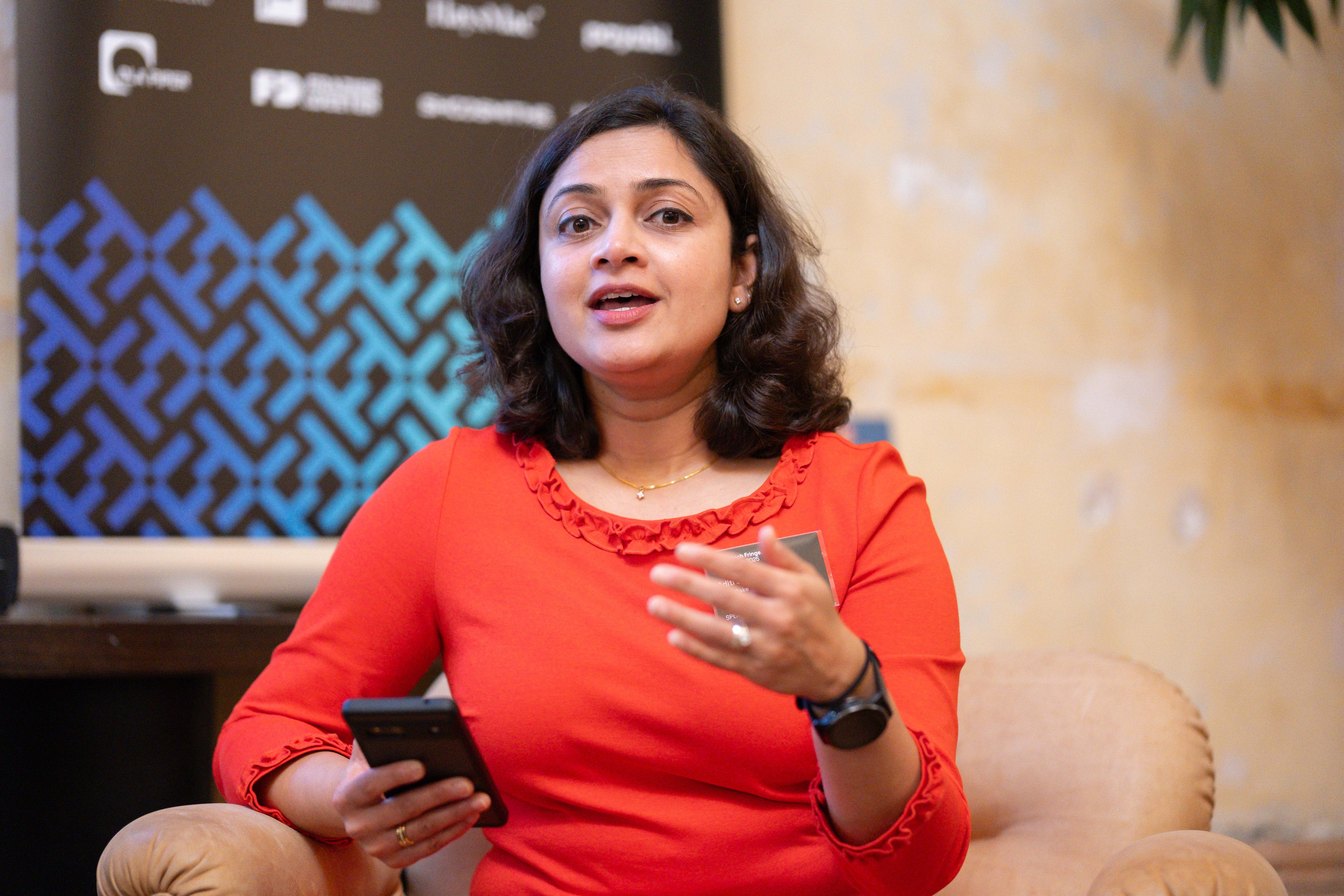
“Attention is all you need – but it is also a bit of a trap. We are paying attention to the hype, but only 6% of financial institutions are actually using truly Agentic AI. The real work is in the remaining 94% who are finding ways to make this technology safe and auditable.”
Aditi Subbarao, Snowflake (formerly Global Financial Services Industry Lead, Instabase)
The takeaway
Scaling with agentic AI means moving from tools that help to teammates that act. Find the high-friction manual tasks that follow a repeatable logic, build agents with deep domain memory, and keep clear human accountability – and you can grow your back-office capacity without drowning in admin.
The Scaling Checklist
The shadow test. Spend a day with your operations team. Any task that needs planning across more than three sub-steps is a candidate for an agentic workflow.
Find the “5-hour problem”. Look for the boring, high-friction tasks that eat half a person’s day. That’s where your first micro-agent goes.
Check your sensors. You can’t run an auto-pilot on bad data. Is your data governance clean enough for an agent to trust?
Name a captain. Every autonomous agent maps to a named human. If no one will take responsibility for its output, it isn’t ready to scale.
These perspectives are drawn from a Fintech Fringe panel on agentic AI, with Simran Singh (FCA), Mike Curtis (Multiply AI), Tom Winstanley (NTT DATA) and Aditi Subbarao (Instabase).
Get Involved with Fintech Week London
Attend • Exhibit • Speak • Sponsor • Host
Agentic AI is one of the conversations on the AI in Action track at this year’s Summit, themed Growth with AI. Fintech Week London runs 7–11 September: five days across the city, built around the two-day Summit on 9–10 September, where founders, investors, operators and regulators come to connect, collaborate and do business in the world’s number one fintech ecosystem.